2026-08-07 13:44:24
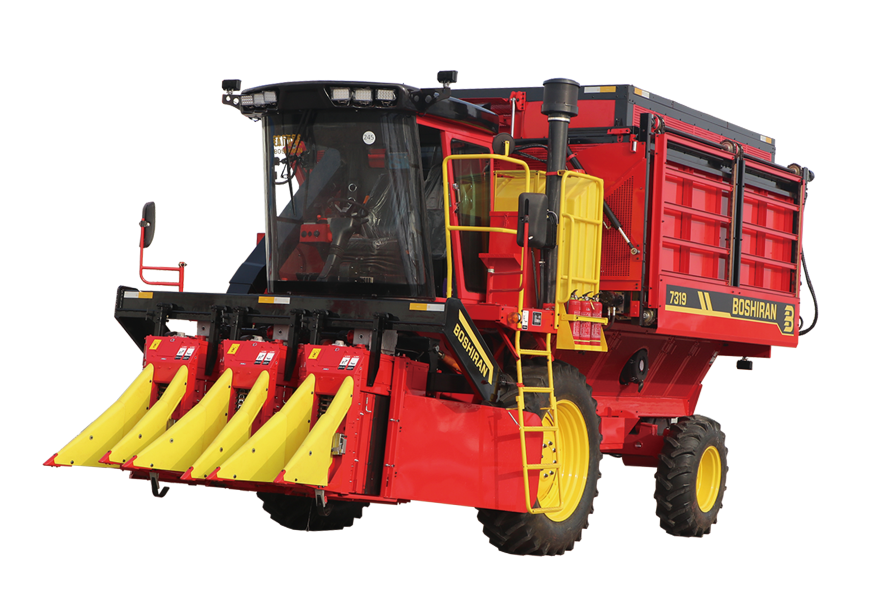
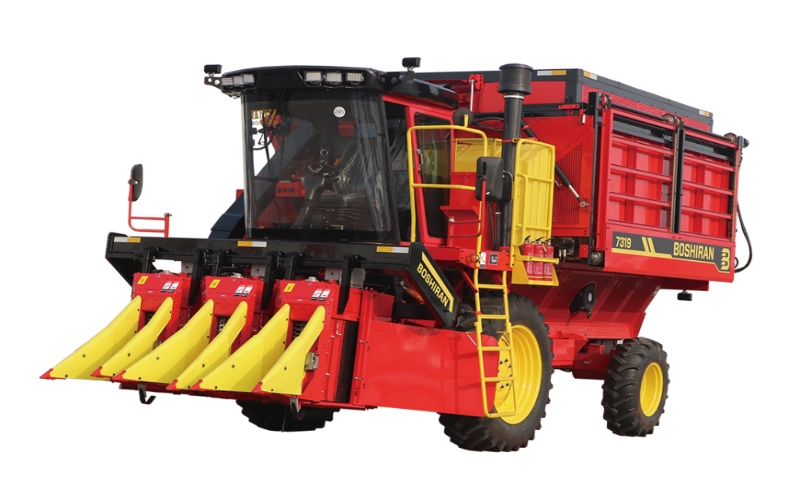
A cotton harvester works by entering cotton rows, separating open cotton bolls from the plant, moving the seed cotton through an air-conveying system, and storing it in a basket or compact module before the cotton goes to the gin. In a spindle-type mechanical cotton picker, rotating barbed spindles twist seed cotton from open bolls, doffers remove the cotton from the spindles, and airflow carries the material into the storage system. In simple terms, Cotton Harvester Work is a controlled sequence of picking, doffing, conveying, cleaning, and unloading.
This process allows one cotton picking machine to replace large amounts of manual labor while improving harvest timing, field efficiency, and seed cotton handling. The National Cotton Council describes this same core mechanism: spindles twist seed cotton from burrs, doffers remove it, and air conveys it into storage.
Cotton is still one of the world’s most important natural fiber crops, and the scale of production explains why mechanized harvesting is essential. USDA’s latest cotton outlook projects 2026/27 global cotton production at 116.0 million bales, while world cotton mill use is projected at about 121.8 million bales. USDA cotton data uses the standard 480-pound bale as a reporting unit.
Cotton Harvester Work is not only about removing cotton from plants. A modern cotton picking machine must harvest as much open cotton as possible while reducing green leaf, trash, moisture problems, fiber damage, and field losses. That is why the mechanical cotton picker is designed around precision contact with the cotton boll rather than aggressive cutting or threshing like a grain combine.
There are two major types of mechanical cotton harvesting systems: the spindle picker and the stripper harvester. The National Cotton Council explains that spindle pickers pull cotton from open bolls with revolving barbed spindles, while stripper harvesters use rollers or mechanical brushes to remove the entire boll from the plant. In the United States, stripper harvesters are mainly used in areas such as Texas and Oklahoma, while spindle pickers are used more widely across the rest of the Cotton Belt.
For most buyers searching for a cotton picking machine, the phrase mechanical cotton picker usually refers to a spindle-type cotton harvester. This type of cotton picking machine is preferred when the goal is to remove mature seed cotton from open bolls while leaving more unopened bolls, stems, and plant material in the field. A stripper harvester can be effective in short, dryland, or “stormproof” cotton conditions, but it usually brings more plant material into the machine and therefore depends heavily on cleaning and crop conditions.
Cotton Harvester Work begins before the machine starts moving. The cotton crop must be mature enough, dry enough, and open enough for efficient picking. Extension guidance from Missouri notes that harvest aids are used to remove leaves, open bolls, reduce trash and green leaf stain, reduce boll rot, and support timely harvesting. This matters because a mechanical cotton picker performs best when the spindle can reach dry, open lint without pulling too much green material into the row unit.
Moisture is another key factor. Cotton Incorporated states that seed cotton with 12% or less total moisture can usually be stored for extended periods without quality loss; green leaf and damp seed often raise moisture above that level. If a cotton picking machine harvests damp seed cotton, the result can be chokes in the row units, more gin drying, staining, and reduced fiber quality. Therefore, professional Cotton Harvester Work includes checking boll openness, crop dryness, defoliation quality, and weather conditions before the operator starts harvesting.
Once harvesting begins, the mechanical cotton picker moves along planted rows. Each row unit centers the cotton plant and guides the fruiting branches into the picking zone. Proper row alignment is critical because even a high-quality cotton picking machine can lose cotton when the row unit is not centered. Cotton Incorporated identifies row units not centered on the row as one of the causes of picking efficiency loss.
Inside the row unit, plant lifters, pressure plates, and cabinet geometry position the plant so the spindle drums can reach the exposed cotton. This part of Cotton Harvester Work is similar to precise feeding in other agricultural machines: if the plant enters unevenly, picking contact becomes inconsistent, stalk losses rise, and the operator may need to slow down.
The spindle is the core component of a mechanical cotton picker. A spindle is a narrow rotating metal part with small barbs or teeth. As the spindle rotates at high speed, it contacts the open cotton boll and twists the lint and attached seed cotton onto itself. The goal is to remove the seed cotton from the burr while leaving most of the burr and plant structure behind.
This is the most important mechanical principle behind Cotton Harvester Work. Unlike a combine header that cuts and threshes grain, a cotton picking machine uses friction, rotation, and controlled plant contact. Research published in Agriculture found that spindle speed and feed speed significantly affect seed cotton rejection rate, picking force, and picking time. In that study, an optimized test combination of 4000 r/min spindle speed and 1.8 m/s feed speed produced a seed cotton rejection rate of 5.45%, a picking time of 0.067 seconds, and a picking force of about 0.659 N.
However, higher spindle speed is not always better. A Beltwide Cotton Conferences study conducted by USDA Agricultural Research Service researchers found that spindle speeds of at least 2000 rpm were needed for adequate picker function, but higher speeds such as 3000–4000 rpm could increase spindle twists, neps, short fiber content, dust, and trash in some conditions. This shows why Cotton Harvester Work depends on matching spindle speed, crop condition, cotton variety, and field speed instead of simply maximizing rotation.
After the spindle twists cotton from the boll, the cotton must be removed quickly so the spindle can return to the picking zone. This is the job of the doffer. In a mechanical cotton picker, doffers are rotating rubber or synthetic discs that wipe seed cotton from the spindles and push it into the conveying path.
The National Cotton Council describes this clearly: cotton picking machines use spindles to twist seed cotton from burrs, and doffers remove the seed cotton from the spindles and knock it into the conveying system. If doffers are worn, poorly adjusted, or not aligned with spindle position, the cotton picking machine may leave lint on the spindle, create spindle twist, increase trash, or reduce field efficiency. For this reason, doffer condition is one of the most important maintenance points in Cotton Harvester Work.
After doffing, the cotton is light, bulky, and mixed with some leaf and trash. A cotton picking machine uses air to move seed cotton through ducts into a basket, accumulator, or onboard module-building chamber. National Cotton Council materials note that all cotton harvesting systems use air to convey and elevate seed cotton into a basket, where it is stored until it can be dumped into a boll buggy, trailer, or module builder.
This airflow stage may sound simple, but it is technically important. Air volume, duct cleanliness, fan performance, and moisture level determine whether seed cotton moves smoothly or causes blockages. Cotton Incorporated warns that frequent row-unit chokes can reduce field efficiency by more than 10%, increasing losses and costs. Clean airflow is therefore a core part of reliable Cotton Harvester Work.
Older cotton harvesters typically carried seed cotton in a basket and unloaded into a boll buggy, trailer, or separate module builder. Modern harvesters may compact cotton directly into modules while harvesting. Cotton Incorporated reports that commercial cotton pickers capable of forming modules became available in 2007–09. It also notes that onboard module-building machines can eliminate the need for boll buggies, module builders, tractors, and additional labor, although they carry higher initial machine cost.
This step has changed how farmers organize harvest logistics. A cotton picking machine with onboard module building can keep the harvest moving because the machine harvests and packages cotton in the same pass. After unloading, modules protect seed cotton until it is transported to the gin. The National Cotton Council notes that a traditional cotton module can weigh up to 25,000 pounds, while other educational material from the organization states that modules commonly hold 13 to 15 bales and that a standard cotton bale weighs about 480 pounds.
The efficiency of Cotton Harvester Work depends on machine type, row number, ground speed, field shape, unloading method, crop yield, operator skill, and crop condition. Cotton Incorporated estimates that a six-row round module-building picker operating at 4.2 mph can achieve about 83% picking field efficiency and 8.0 acres per hour field capacity. A six-row basket picker at the same speed is listed at about 75% field efficiency and 7.3 acres per hour.
Picking efficiency and field efficiency are not the same. Picking efficiency refers to how much available seed cotton is removed from the plant. Field efficiency refers to how much of the machine’s field time is actually spent harvesting instead of turning, unloading, stopping, or servicing. A well-adjusted mechanical cotton picker may perform strongly in both areas, but poor adjustment can reduce both. Cotton Incorporated states that spindle pickers are capable of harvesting 95–98% of the cotton produced, but some producers experience field harvest loss approaching 20% when adjustment, crop condition, or operation is poor.
Several variables determine how well a cotton picking machine performs.
First, crop maturity matters. Bolls should be open and dry enough for the spindle to twist the lint away cleanly. Picking too soon after defoliation can leave unopened or damp bolls in the field.
Second, spindle and doffer condition matters. Worn spindles cannot grab lint effectively, while worn doffers cannot remove cotton cleanly from the spindle. This reduces the performance of the mechanical cotton picker and can increase lint loss.
Third, row-unit alignment matters. A cotton picking machine must stay centered on the row. Poor steering, uneven row spacing, or incorrect row tracking can leave cotton outside the picking zone.
Fourth, machine speed matters. Higher ground speed may improve acres per hour, but only if the row units, spindles, doffers, and airflow can process the crop without leaving cotton behind. In technical Cotton Harvester Work, speed is optimized, not simply increased.
Fifth, moisture and trash matter. Dry seed cotton moves more easily through the machine and stores better. High moisture, green leaves, and plant debris increase blockages, staining, drying costs, and quality risk.
A mechanical cotton picker is built to remove seed cotton with limited damage to the fiber. The spindle touches the cotton boll, twists the lint, and releases it through doffing. When correctly adjusted, the cotton picking machine avoids unnecessary cutting, grinding, or crushing.
Fiber quality matters because cotton value is influenced by length, strength, color, leaf grade, trash, and preparation. Excessive spindle speed, worn parts, wet harvest conditions, or poor defoliation can increase neps, short fibers, trash, or staining. This is why the best Cotton Harvester Work combines agronomy, machinery settings, operator skill, and maintenance rather than treating harvesting as a simple one-step operation.
Common problems include field loss, spindle twist, row-unit choking, high trash content, damp seed cotton, doffer wear, poor air conveying, and uneven module formation. Many of these problems are preventable.
For example, if cotton remains on the plant after a cotton picking machine passes, the cause may be poor row alignment, worn spindles, immature bolls, incorrect spindle clearance, or excessive ground speed. If cotton stays wrapped on the spindles, the cause may be doffer wear or poor doffer adjustment. If ducts clog frequently, the cause may be high moisture, green leaf, insufficient airflow, or heavy trash.
A mechanical cotton picker performs best when daily inspection is part of the harvest routine. Operators should check spindle condition, doffer wear, moistener pads, row-unit clearance, fan ducts, baskets, belts, chains, tires, hydraulic systems, and sensors before long harvest shifts.
The future of Cotton Harvester Work is moving toward greater automation, better sensing, and more data-driven field management. USDA Agricultural Research Service notes that cotton has been machine harvested with pickers and strippers in the United States for more than 80 years, and current research is investigating new approaches such as whole-plant harvesting and post-harvest separation.
For farmers and contractors, the practical direction is clear: future mechanical cotton picker designs will likely focus on higher field capacity, better crop sensing, improved module handling, lower losses, easier maintenance, and cleaner seed cotton. For manufacturers and exporters, explaining how a cotton picking machine works is also an effective way to build trust with buyers who care about durability, harvesting efficiency, spare parts, and service support.
The main working principle is mechanical separation. A mechanical cotton picker uses rotating spindles to twist seed cotton from open bolls, doffers to remove cotton from the spindles, and airflow to move the seed cotton into a basket or module system.
In many markets, cotton harvester and cotton picking machine are used almost interchangeably. More precisely, a cotton harvester can include both picker-type and stripper-type machines, while a cotton picking machine usually refers to a spindle-type mechanical cotton picker.
A cotton picking machine uses spindles because cotton lint can wrap around a rotating barbed surface. This allows the mechanical cotton picker to pull seed cotton from open bolls without removing the entire plant.
Picking efficiency depends on crop maturity, defoliation quality, moisture, spindle condition, doffer adjustment, row alignment, airflow, field speed, and operator skill. Good Cotton Harvester Work means balancing these factors to reduce loss and protect fiber quality.
Moisture control is important because damp seed cotton is harder to convey, more likely to clog the machine, and more likely to stain or lose quality in storage. Many technical recommendations use 12% seed cotton moisture as a key reference point for safe harvesting and storage.
Cotton Harvester Work is a coordinated mechanical process: the row unit guides the plant, the spindle removes seed cotton from the boll, the doffer strips cotton from the spindle, the air system conveys cotton through the machine, and the basket or module builder stores cotton for transport to the gin.
A modern mechanical cotton picker is not just a labor-saving machine; it is a precision harvesting system that affects field efficiency, fiber quality, harvest timing, and total production cost. For any farm, contractor, or dealer evaluating a cotton picking machine, understanding how the machine works is the first step toward choosing the right model, operating it correctly, and getting the best return from mechanized cotton harvesting.
Related Products
Discover Our Comprehensive Range of Large Agricultural Machinery Categories