2026-08-20 17:14:40
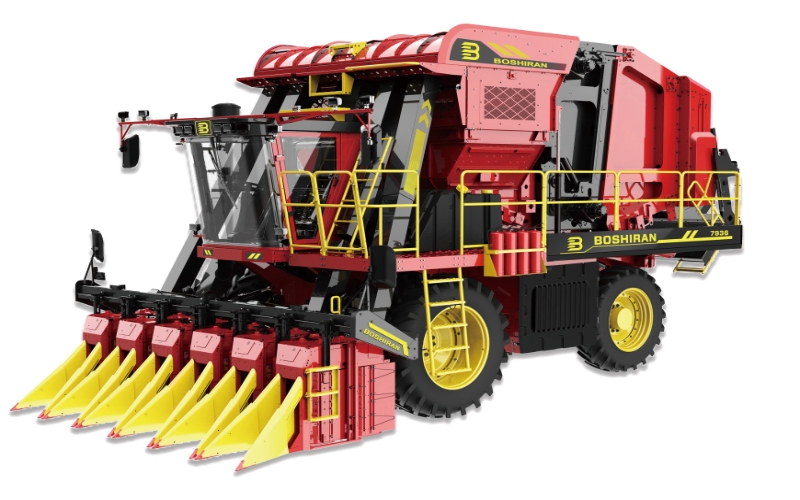
A cotton picker is a specialized agricultural harvesting machine designed to selectively remove seed cotton from open cotton bolls while leaving most of the plant, burrs, stems, and unopened bolls in the field. In modern commercial cotton farming, the term usually refers to a self-propelled spindle-type cotton picker equipped with multiple row units and either a basket or an onboard cotton collection and baling system.
Unlike a general-purpose combine harvester, a cotton picker is built specifically around the physical characteristics of mature cotton. Its job is not simply to cut a crop. It must collect exposed seed cotton efficiently while limiting unnecessary plant material, field loss, and contamination.
This article focuses on what a cotton picker is, the different types available, its main systems, where it is used, and how it differs from other cotton harvesting equipment. For a detailed explanation of the actual picking, doffing and conveying process, see Boshiran's existing guide, How Does a Cotton Harvester Work?
The term cotton picker can sometimes cause confusion because “cotton harvester,” “cotton picking machine,” and “cotton picker machine” are often used interchangeably in agricultural equipment searches.
Technically, however, there is an important distinction.
A cotton harvester is the broader category of machinery used to mechanically harvest cotton. Two major harvesting systems fall within this category:
spindle cotton pickers;
cotton strippers.
A cotton picker, more specifically, normally refers to a spindle-type machine that removes seed cotton from open bolls.
Here, seed cotton means the cotton fiber together with the cottonseed before ginning. The cotton picker collects this material in the field, after which it is transported for further handling and eventually sent to a cotton gin, where lint is separated from seed.
Cotton Incorporated similarly distinguishes spindle-type cotton harvesters from stripper harvesting systems when describing modern mechanical cotton harvesting.
So, in simple terms:
A cotton picker is a machine that mechanically picks mature seed cotton from open bolls without intentionally removing the entire cotton plant.
One of the most important distinctions for someone learning about cotton harvesting equipment is the difference between a cotton picker and a cotton stripper.
Both mechanize cotton harvesting, but they interact with the crop differently.
| Comparison | Cotton Picker | Cotton Stripper |
|---|---|---|
| Primary harvesting method | Selectively removes seed cotton | Strips material from the plant |
| Main crop target | Open cotton bolls | Open and other harvestable boll material |
| Plant material collected | Generally lower | Generally higher |
| Typical harvesting unit | Spindle-based picking unit | Brush or roller stripping unit |
| Seed cotton cleanliness | Usually less field trash collected | More cleaning may be required |
| Common name | Spindle picker | Stripper harvester |
Cotton Incorporated notes that a spindle picker removes seed cotton from the boll while leaving the burr and much of the plant behind. A stripper, by contrast, removes substantially more boll and plant material during harvesting.
This difference matters because the right harvesting system depends on cotton variety, production system, local climate, crop characteristics and regional harvesting practices.
A farmer searching for a cotton picker machine, therefore, should first determine whether a spindle picking system or stripping system matches the crop being grown.
Modern cotton pickers can be classified in several ways. For buyers, three distinctions are particularly useful.
The spindle-type machine is what most buyers mean when they search for a modern cotton picker.
These machines use specialized picking units to collect exposed seed cotton from mature bolls. Multiple row units allow a self-propelled machine to harvest several cotton rows during each pass through the field.
Because the mechanical principle has already been covered in our How Does a Cotton Harvester Work? article, we will not repeat the spindle, doffer and airflow sequence here.
From a product perspective, what matters is that spindle harvesting allows the machine to target seed cotton rather than treating the entire above-ground plant as harvested material.
A traditional basket cotton picker collects harvested seed cotton in an onboard basket.
When the basket reaches the required level, the harvested cotton is transferred to supporting equipment for further field handling and transportation.
Basket-based systems remain relevant because they offer a comparatively straightforward harvesting configuration and can suit farms where established cotton transportation and module-handling equipment is already available.
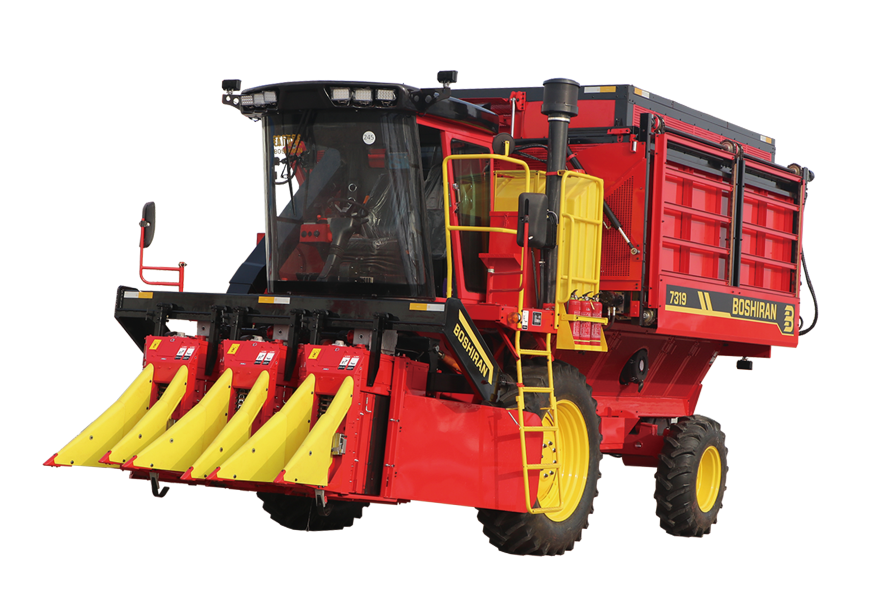
Boshiran's current cotton picker range, for example, includes basket-type self-propelled machines as part of its product portfolio.
Another category combines cotton picking with onboard cotton compaction or module formation.
Instead of relying entirely on a conventional basket and separate downstream field handling process, these machines can package or compact harvested cotton as part of the harvesting operation.
Cotton Incorporated identifies basket-based, half-module and round-module approaches among the seed cotton handling systems associated with spindle harvesting.
For buyers, this distinction affects much more than the machine itself. It can influence:
field logistics;
supporting equipment requirements;
labor allocation;
harvest continuity;
transportation planning;
initial machinery investment.
Because these differences deserve a full comparison, basket cotton picker vs. baler cotton picker is better treated as a separate purchasing topic rather than being covered in depth here.
Cotton pickers are also commonly identified by the number of rows they harvest in one pass.
Examples include:
3-row cotton pickers;
4-row cotton pickers;
6-row cotton pickers.
More rows generally mean greater potential field coverage per pass, but row number alone does not determine which machine is best.
Field dimensions, planted row spacing, turning space, annual cotton acreage, transport requirements, harvest window and operating cost all influence the decision.
Boshiran currently offers 3-row, 4-row and 6-row configurations, including both conventional and baling models.
For this reason, buyers comparing machine width should refer to the separate 3-Row vs 4-Row vs 6-Row Cotton Picker guide rather than assuming the machine with the most rows is automatically the best choice.
Although cotton picker specifications vary between manufacturers and models, most modern self-propelled machines contain several major systems.
The row units are positioned at the front of the cotton picker and correspond to the cotton rows being harvested.
Their design must match the intended planting configuration and allow the machine to travel accurately along established rows.
The picking system is the defining feature of a spindle cotton picker.
It contains the components responsible for interacting with mature cotton and separating seed cotton from the open boll.
Because freshly picked cotton is light and bulky, airflow is commonly used to move harvested material through the machine toward its collection system.
The harvested seed cotton ultimately needs to be held or compacted before leaving the machine.
Depending on the cotton picker design, this may be:
a cotton basket;
an accumulator;
an onboard module system;
an integrated baling system.
Modern cotton pickers are usually self-propelled machines with their own engine, transmission and hydraulic systems.
Power requirements depend on machine size, harvesting width, field conditions and the additional systems installed on the machine.
Modern machines may also incorporate electronic monitoring, cab controls, guidance functions and operating information that help the operator manage harvesting conditions and machine performance.
These systems explain why a cotton picker should be viewed as an integrated harvesting platform rather than simply a picking head mounted on a vehicle.
The primary purpose of a cotton picker is straightforward:
to harvest commercially grown cotton efficiently during a relatively limited harvest window.
But the value of mechanical cotton picking goes beyond replacing hand labor.
A properly selected cotton picker can help a farm:
harvest larger areas within the available season;
reduce dependence on large seasonal picking crews;
improve consistency of field harvesting;
coordinate harvesting with cotton maturity and weather;
reduce the time cotton remains exposed in the field;
organize harvested cotton for transportation and ginning.
This becomes especially important on commercial farms where delays during harvest can expose open cotton to wind, rainfall or quality deterioration.
Cotton Incorporated notes that well-operated spindle pickers can achieve very high harvesting efficiency, while poor machine preparation or operation can result in substantially higher field losses.
The machine itself, therefore, is only one part of an effective harvesting system. Crop preparation, operator skill, machine adjustment and field conditions remain important.
Cotton pickers are most valuable where the scale and production system justify mechanized harvesting.
They may be used by:
commercial cotton farms;
agricultural cooperatives;
large agricultural enterprises;
contract harvesting businesses;
cotton-producing regions transitioning from manual to mechanized harvesting.
Machine size can vary considerably.
A smaller multi-row picker may make more sense where fields are fragmented, turning areas are restricted or annual cotton acreage is moderate. Larger machines are generally more attractive where operators need to cover extensive, relatively uniform fields within a short harvesting period.
This is why there is no single cotton picker configuration that is ideal for every farm.
No.
A cotton picker harvests cotton in the field, while a cotton gin processes harvested seed cotton after it leaves the field.
The picker collects seed cotton, which still contains both lint and cottonseed.
At the gin, the fiber is separated from the seed and prepared for later stages of the cotton supply chain.
Understanding this distinction is useful because cotton harvesting, field handling, transportation and ginning are different stages of cotton production.
A cotton picker is responsible primarily for the harvesting stage.
Once a buyer understands what a cotton picker is, the next question should not immediately be, “Which model has the highest capacity?”
The more useful question is:
Which machine fits the farm's cotton production system?
Before comparing individual machines, buyers should establish several basic requirements:
planted row spacing;
annual cotton acreage;
average field size;
field shape and turning conditions;
expected harvest window;
desired number of harvesting rows;
basket or onboard baling requirements;
local spare-parts availability;
operator training requirements;
service and maintenance support.
Only after these conditions are clear do specifications such as engine power, working speed, spindle configuration, basket capacity and machine dimensions become meaningful.
This is also why cotton picker selection should not be based on one specification in isolation.
Boshiran develops self-propelled cotton harvesting equipment for mechanized cotton production and currently offers 3-row, 4-row and 6-row cotton pickers, with both basket and baling configurations represented in its product range.
Rather than treating every cotton farm as requiring the same machine, the product range allows equipment selection to account for differences in field scale, row configuration and seed cotton handling requirements.
For buyers beginning their research, the cotton picker product range provides the machine-level information, while supporting technical articles can be used to understand harvesting principles, specifications and machine selection in greater depth.
A cotton picker is a self-propelled agricultural machine used to selectively harvest seed cotton from open cotton bolls. Modern machines generally use spindle-type picking systems and can be configured with different row counts and cotton-handling systems.
The key point is that a cotton picker is not simply another type of combine. It is a crop-specific harvesting machine designed around the structure of the cotton plant and the need to collect exposed seed cotton with limited unwanted plant material.
For someone researching cotton harvesting equipment, understanding this definition is the first step. The next questions are usually how the picking system works, which specifications matter, how many rows are appropriate, and whether a basket or baling cotton picker better matches the farm's harvesting system.
Related Products
Discover Our Comprehensive Range of Large Agricultural Machinery Categories