2026-09-23 10:25:51
A cotton picker is a complex harvesting machine in which hundreds or thousands of components work together under demanding field conditions. The condition of relatively small wear parts can directly affect picking efficiency, cotton losses, machine downtime, and maintenance costs.
For operators and farm maintenance teams, understanding the major cotton picker spare parts is therefore essential. The most important components are not limited to the visible harvesting elements. Spindles, spindle bushings, doffers, moistener pads, picker bars, bearings, cam-track components, belts, chains, hydraulic components, and air-handling parts all contribute to reliable harvesting performance.
This guide explains the main cotton picker spare parts, what each component does, common signs of wear, and what operators should consider when planning replacement parts.
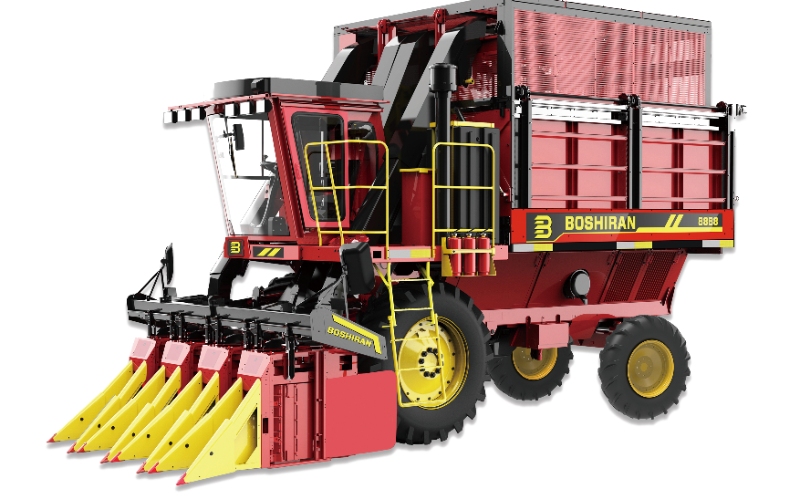
A spindle-type cotton picker uses a coordinated sequence to remove seed cotton from open bolls.
At the picking unit, rotating spindles enter the open bolls and grasp the cotton. The cotton is then removed from the spindles by doffers and transferred into the machine's cotton-handling system.
Meanwhile, the moistener system applies a cleaning solution to the spindles. This helps control plant gums and residues and supports effective doffing. Cotton Incorporated describes the spindle moistening system as an important part of keeping spindles clean and easier to doff.
This means that a problem with one component can affect another. For example, worn spindles can reduce cotton capture, while incorrect bar height can affect the clearance between spindles, doffers, and moistener components.
Understanding the system as a whole is more useful than replacing individual parts based only on visible damage.
The spindle is one of the most important wear components on a spindle-type cotton picker.
Spindles rotate and enter open cotton bolls to grasp and pull seed cotton from the burr. The spindle's working surface and barbs therefore have a direct effect on cotton removal.
According to Cotton Incorporated's preseason maintenance guidance, spindle barbs need to remain sufficiently sharp to grasp, hold, and pull seed cotton effectively. Spindles can also wear differently along their length depending on crop and soil conditions.
Operators should look for:
Dull or rounded barbs
Bent spindles
Broken spindles
Corrosion
Uneven wear between spindle positions
Increased spindle wrapping
More cotton remaining on plants
A damaged spindle should not simply be left in service until a larger failure occurs. Cotton Incorporated specifically recommends replacing broken or damaged spindles because they can cause additional damage to doffers, moistener pads, and supporting components.
Spindle bushings support the spindle assembly and allow the spindle to rotate correctly while maintaining its required position.
Bushing condition is particularly important because excessive wear can contribute to spindle movement and affect the relationship between the spindle and doffer.
Cotton Incorporated notes that spindle bushings can experience faster wear in areas where the spindle is exposed to greater side forces.
A worn bushing can contribute to:
Excessive spindle movement
Incorrect spindle-to-doffer alignment
Uneven wear
Reduced harvesting consistency
Increased load on related components
When replacing spindles, the condition of the corresponding bushings should also be evaluated rather than treating the spindle as an isolated component.
The doffer performs the next critical step after the spindle captures cotton.
Its function is to remove seed cotton from the spindle through a wiping, unwinding, or stripping action and transfer it toward the cotton-handling system.
Doffers are exposed to continuous friction and contact with rotating spindles, making them important wear parts.
Look for:
Rounded doffer lugs
Damaged or torn lugs
Uneven wear
Excessive spindle wrapping
Poor cotton removal from spindles
Abnormal contact between doffers and spindles
Cotton Incorporated notes that rounded leading edges on doffer lugs can reduce effectiveness and that incorrect picker-bar height can contribute to doffer wear.
Doffer condition should therefore be evaluated together with bar height and spindle-to-doffer clearance.
The moistener pad is a relatively small component, but it performs an important function in the spindle harvesting system.
The moistener system supplies a cleaning solution to the spindle. This helps remove plant gums and residues and helps maintain effective spindle operation and doffing.
A properly functioning moistener system can help prevent excessive buildup on spindle surfaces.
Operators should check for:
Worn moistener pads
Damaged pads
Blocked nozzles
Dirty strainers
Uneven solution distribution
Incorrect solution concentration
Leaking hoses or fittings
A poorly maintained moistener system can sometimes be mistaken for a spindle or doffer problem. In fact, cotton picker maintenance guidance specifically identifies the moistener system as an important factor in spindle cleanliness and doffing performance.
Replacing a moistener pad will not solve a problem if the solution is not reaching the pad correctly.
The complete system can include:
Nozzles
Hoses
Strainers
Fittings
Distribution components
Solution tank components
These parts should be checked for blockage, leakage, contamination, and damage.
A blocked nozzle can result in uneven moistening across the picking units, while a damaged hose can reduce or interrupt solution delivery.
This is why moistener-system maintenance should be approached as a complete system rather than focusing only on the visible pad.
The picker bar supports the spindle assemblies and is critical to maintaining the correct relationship between the spindle, doffer, and moistener system.
Correct bar height is particularly important.
Cotton Incorporated explains that a low bar can interfere with effective doffing, while a high bar can cause excessive contact with doffers and moistener pads.
Operators should check for:
Bent bars
Uneven bar height
Worn mounting points
Damaged hardware
Incorrect shimming
Excessive movement
A picker bar does not necessarily need replacement simply because another component in the bar assembly is worn. The maintenance decision should be based on the condition and dimensional requirements specified for the particular machine.
The spindle needs to move through a controlled path during the harvesting cycle.
The cam track and related follower components help control this movement.
Wear in these components can affect spindle positioning and movement, which may subsequently influence how effectively the spindle enters the cotton and interacts with the doffer.
Typical inspection points include:
Cam-track wear
Cam followers
Bearings or rollers
Mounting hardware
Lubrication condition
Abnormal noise or movement
The exact inspection procedure and allowable wear limits vary by machine design, so operators should use the relevant service documentation rather than applying a universal measurement.
Bearings and bushings are found throughout a cotton picker, including the picking units, doffer assemblies, shafts, conveyors, fans, and other rotating systems.
Their job is to support moving components while controlling friction and maintaining alignment.
A worn bearing may produce:
Abnormal noise
Excessive vibration
Heat
Shaft movement
Uneven component wear
Increased power consumption
Because bearings are often hidden inside assemblies, preventive inspection and lubrication are important.
Cotton picker maintenance guidance identifies bearings and bushings among the components requiring particular attention during preseason maintenance.
Belts and chains transfer power between different machine systems.
Depending on the cotton picker design, they may be used in:
Picking-unit drives
Fans
Conveyors
Material-handling systems
Auxiliary systems
Common signs of belt or chain problems include:
Excessive slack
Cracks
Fraying
Uneven wear
Abnormal vibration
Noise
Slippage
Misalignment
A damaged drive component can reduce harvesting performance or cause unplanned downtime.
Operators should follow the machine's specified procedures for tension, alignment, lubrication, and replacement.
Cotton pickers contain numerous gears and shafts that synchronize different machine functions.
Drive components may include:
Gears
Sprockets
Shafts
Couplings
Drive chains
Bearings
Gear housings
These components need to maintain accurate timing and power transmission.
Excessive backlash, unusual noise, overheating, or abnormal vibration can indicate a problem in a drive system.
Because gear and shaft assemblies can involve significant mechanical forces, major repairs should generally follow the machine manufacturer's service procedures.
After cotton is removed from the spindle, it needs to be transported through the machine.
Airflow and conveying systems can include:
Fans
Ducts
Belts
Seals
Air passages
Screens or grids
Conveying components
Cotton, leaves, dust, and other plant material can accumulate in these areas.
Blocked or damaged airflow components can reduce material movement and potentially cause conveying problems.
Regular cleaning is therefore an important part of maintaining harvesting performance.
Hydraulic systems can operate various functions on a cotton picker, depending on the machine configuration.
Common hydraulic service parts include:
Hydraulic hoses
Filters
Fittings
Valves
Cylinders
Seals
Pumps
Hydraulic leaks should never be ignored.
High-pressure hydraulic fluid can cause serious injection injuries, and damaged hoses can fail unexpectedly.
Before inspecting hydraulic components, follow the machine's safety and pressure-relief procedures.
Modern cotton pickers increasingly incorporate electronic control systems.
Depending on the machine, components may include:
Sensors
Wiring harnesses
Switches
Controllers
Relays
Connectors
Displays
Position sensors
Electrical problems can be more difficult to diagnose than mechanical wear because a machine may continue operating while a sensor or communication fault affects one particular function.
When diagnosing an electronic problem, operators should check the machine's diagnostic codes and wiring information rather than replacing components based solely on symptoms.
Filters and lubrication-related parts are often inexpensive compared with major mechanical assemblies, but they play an important role in machine reliability.
Depending on the machine, maintenance items may include:
Engine oil filters
Fuel filters
Hydraulic filters
Air filters
Cooling-system filters
Grease
Spindle lubricant
Cleaning solution
Proper lubrication reduces friction and wear, while filtration helps protect sensitive components from contamination.
Cotton picker maintenance information emphasizes the importance of spindle lubrication and cleaning products in reducing wear and maintaining harvesting performance.
Some cotton picker systems also use pressure plates and picker ribs around the spindle harvesting area.
These components help control the position and interaction of the harvesting elements.
They should be inspected for:
Bending
Damage
Excessive wear
Incorrect clearance
Loose mounting hardware
Technical guidance for spindle-type cotton harvesters specifically recommends checking picker ribs for proper clearance and replacing broken or bent ribs.
There is no universal replacement schedule because wear depends on:
Annual operating hours
Cotton yield
Soil conditions
Sand and dust
Crop residue
Moisture
Harvesting conditions
Machine settings
Maintenance quality
However, operators generally pay particular attention to components that have continuous contact or relative movement.
These commonly include:
| Component | Main Function | Typical Concern |
|---|---|---|
| Spindle | Grasps cotton from open bolls | Dullness, bending, corrosion, wear |
| Spindle bushing | Supports spindle rotation | Excessive play and misalignment |
| Doffer | Removes cotton from spindle | Rounded or damaged lugs |
| Moistener pad | Applies cleaning solution to spindle | Wear, hardening, uneven contact |
| Moistener nozzle | Distributes solution | Blockage or uneven flow |
| Picker bar | Supports spindle assemblies | Height and alignment |
| Cam components | Control spindle movement | Wear and incorrect movement |
| Bearings | Support rotating components | Noise, heat, play, vibration |
| Belts | Transfer power | Cracking, stretching, slippage |
| Chains | Transfer mechanical power | Stretch, wear, poor lubrication |
| Gears | Transmit and synchronize power | Wear, backlash, noise |
| Hydraulic hoses | Transfer hydraulic pressure | Leakage or damage |
| Sensors | Monitor machine operation | Signal or diagnostic faults |
This is a maintenance-planning framework rather than a universal replacement schedule. The machine's service documentation should always determine the applicable specifications and intervals.
Operators should not rely exclusively on visible damage.
A component may be worn enough to affect harvesting performance before it completely fails.
Useful warning signs include:
If more cotton is being left on plants despite suitable crop conditions, inspect the spindle, doffer, bar-height, and related systems.
Frequent spindle wrapping can be associated with problems involving spindle condition, doffer performance, moistening, alignment, or machine adjustment. It should be diagnosed systematically rather than assuming that the spindle alone is responsible.
New or increasing noise can indicate bearing, gear, chain, belt, or alignment problems.
Abnormal heat around a bearing, gearbox, hydraulic component, or drive system may indicate friction, lubrication problems, overload, or component failure.
If one section of a picking unit wears significantly faster than another, investigate alignment, clearance, crop conditions, and machine setup before simply installing another replacement part.
Cotton picker components can look similar while having important differences.
Before ordering a replacement part, operators should verify:
Machine model
Serial number
Part number
Component position
Left-hand or right-hand configuration
Dimensions
Material
Assembly compatibility
Required quantity
For example, spindle assemblies can have specific directional and installation requirements. Cotton Incorporated specifically notes that the correct left- or right-hand spindle must match the relevant nut thread and drum installation.
Using an incorrect part can cause poor fit, accelerated wear, harvesting problems, or damage to adjacent components.
When sourcing cotton picker spare parts, operators may encounter several categories of replacement components.
These are produced according to the original equipment specifications and are generally identified by the equipment manufacturer's part number.
Replacement components may be produced by other manufacturers for a particular application.
Aftermarket parts are independently manufactured replacement components that may be available for various cotton picker models.
The important consideration is not simply the category of the part.
Operators should verify:
Dimensional compatibility
Material and hardness where relevant
Wear characteristics
Fit and alignment
Machine compatibility
Supplier quality control
Warranty and technical support
For critical components such as spindles, doffers, bearings, and drive parts, compatibility and manufacturing quality can have a direct effect on harvesting performance.
A well-planned spare parts inventory can reduce downtime during the short cotton harvesting window.
Instead of stocking every possible component, maintenance teams can prioritize parts according to:
Wear Rate + Failure Risk + Replacement Time + Harvest-Critical Importance
High-priority inventory may include frequently replaced wear parts and components that are difficult to obtain quickly.
A practical inventory can be organized into:
Spindles
Spindle bushings
Doffers
Moistener pads
Filters
Belts
Common bearings
Specific drive components
Hydraulic hoses
Sensors
Electrical components
Important seals
Lubricants
Cleaning solutions
Grease
Filters
Fasteners and service hardware
The exact inventory should be based on the machine model, historical maintenance records, local parts availability, and expected annual operating hours.
A common mistake is to treat spare parts as something that is only needed after a failure.
Effective cotton picker maintenance combines:
Inspection → Adjustment → Lubrication → Cleaning → Wear Measurement → Replacement
For example, a new spindle may not solve a harvesting problem if the actual cause is incorrect bar height or a worn bushing.
Similarly, replacing a doffer without checking spindle condition and clearance may allow the same problem to return.
Cotton Incorporated recommends preseason inspection of the spindle, spindle bushings, bar height, doffers, and related systems because their conditions are closely connected.
Inspect spindle condition.
Check spindle bushings.
Inspect doffer lugs.
Check moistener pads.
Clean and inspect moistener nozzles and strainers.
Verify picker-bar condition and height.
Inspect cam-track components.
Check bearings and lubrication points.
Inspect belts and chains.
Check hydraulic hoses.
Test electrical and sensor systems.
Inspect airflow and conveying components.
Monitor:
Cotton left on plants
Spindle wrapping
Abnormal noise
Vibration
Overheating
Hydraulic leaks
Moistener performance
Cotton flow
Machine warnings
Clean harvesting units thoroughly.
Inspect wear components.
Record replaced parts.
Record operating hours.
Identify recurring failures.
Order critical parts before the next season.
Store components according to their material and manufacturer's requirements.
Understanding cotton picker spare parts is essential for maintaining harvesting efficiency and avoiding unnecessary downtime.
The spindle, spindle bushing, doffer, moistener pad, picker bar, cam components, bearings, belts, chains, hydraulic components, airflow systems, and electronic components all perform different functions, but they operate as an interconnected system.
The most important maintenance principle is therefore to diagnose the system rather than replace parts based only on symptoms.
A decline in picking efficiency may involve spindle wear, doffer condition, bar height, moistening, alignment, or several factors at the same time. Regular inspection, correct adjustment, timely replacement, and accurate part identification can help operators maintain consistent harvesting performance throughout the season.
For any specific replacement, the machine's operator's manual, service manual, model information, and applicable manufacturer specifications should take precedence over general maintenance guidance, because component designs, clearances, lubrication requirements, and replacement intervals vary between cotton picker models.
Related Products
Discover Our Comprehensive Range of Large Agricultural Machinery Categories
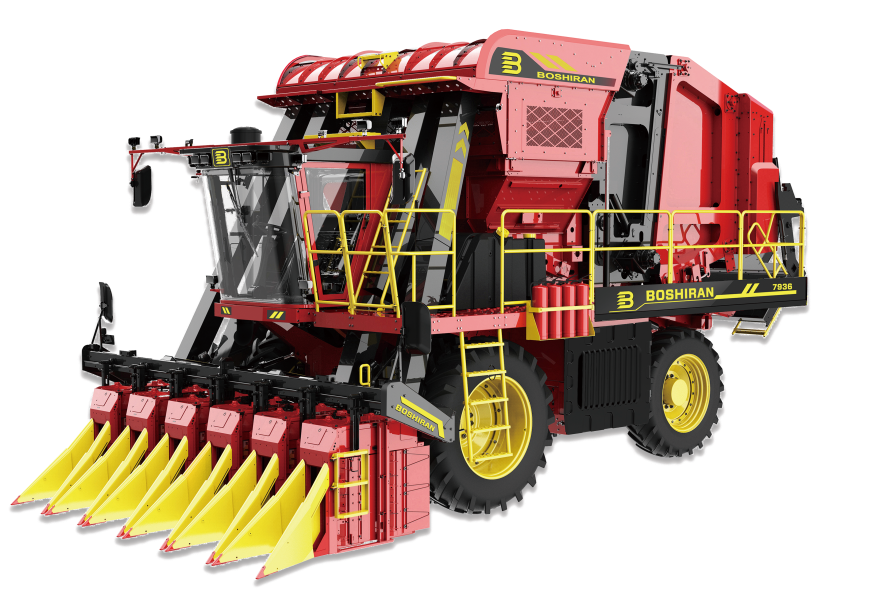
Boshiran 7936(4MZD-6C/6D) Self Propelled Cotton Picker with Baler
The Boshiran 6-row cotton picker is designed spe...
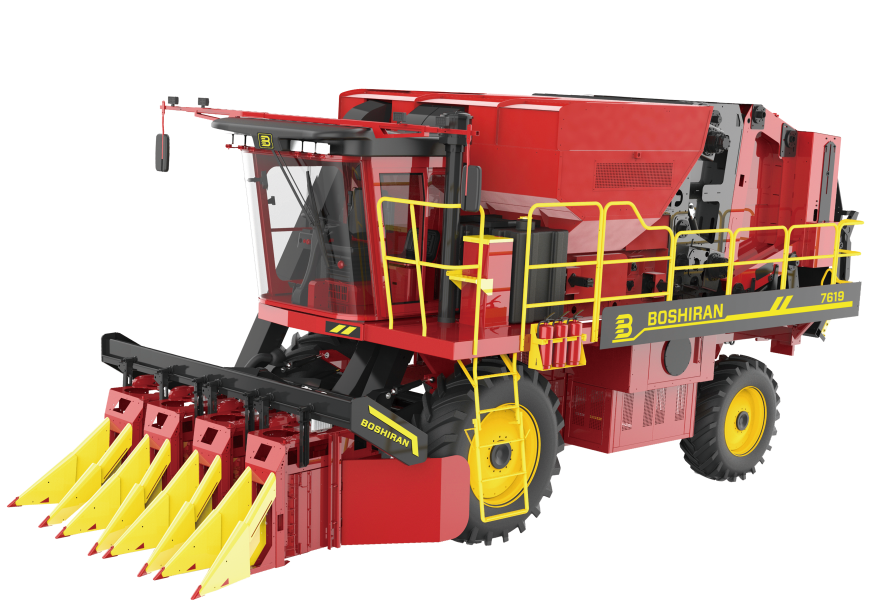
Boshiran 7493 (4MZD-4A) Self Propelled Cotton Picker with Baler
Boshiran independently develops and manufactures...
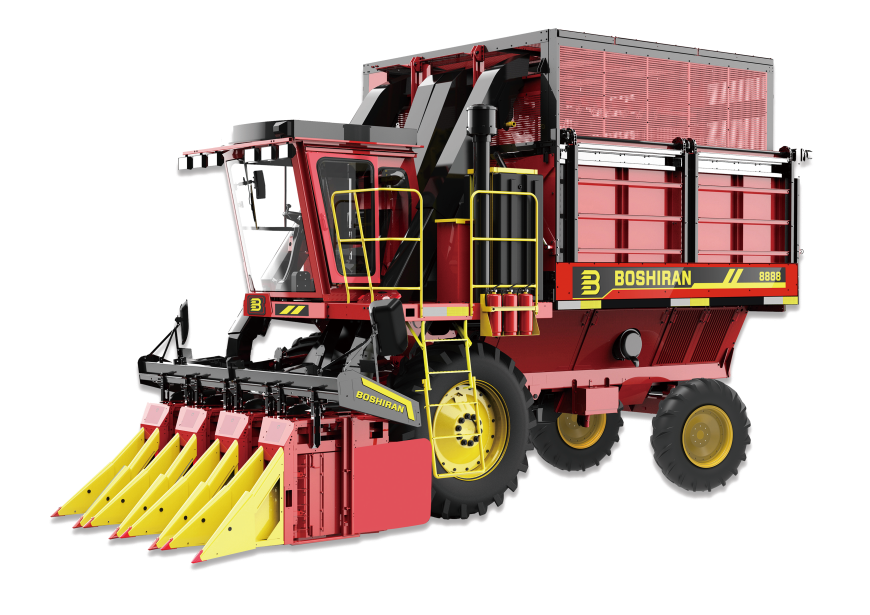
Bosiran 4MZ-4A Self Propelled Cotton Picker
The Boshiran Small Intelligent 4-Row Cotton Pick...
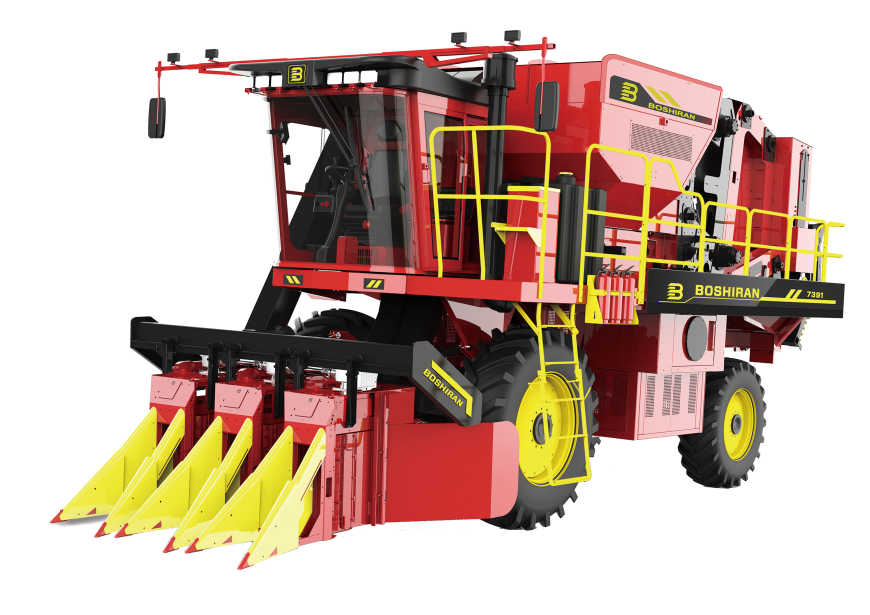
Bosiran 7391 (4MZD-3A) Self Propelled Cotton Picker with Baler
Boshiran 3-Row Baling Cotton Harvester combines ...
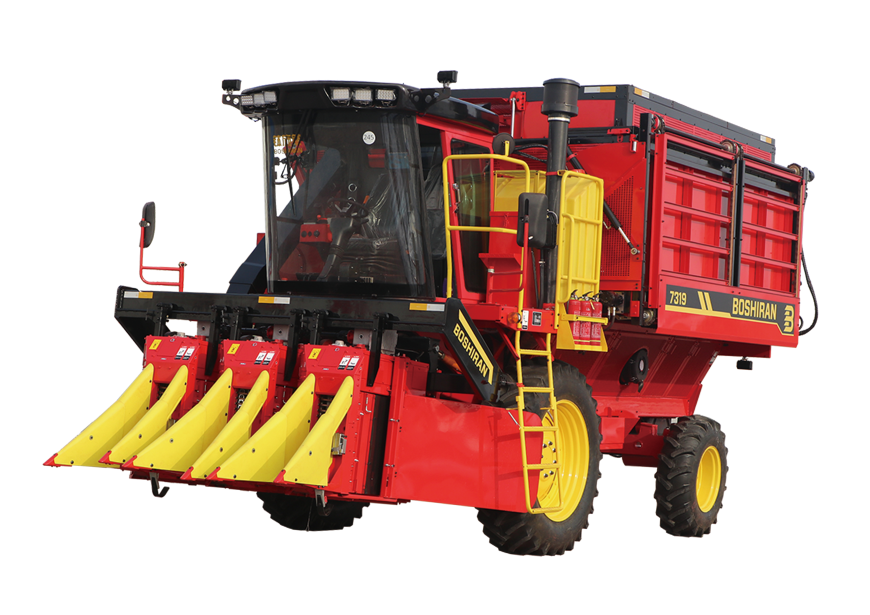
Boshiran 4MZ-3B Self Propelled Cotton Picker
After years of technical accumulation,Boshiran 3...
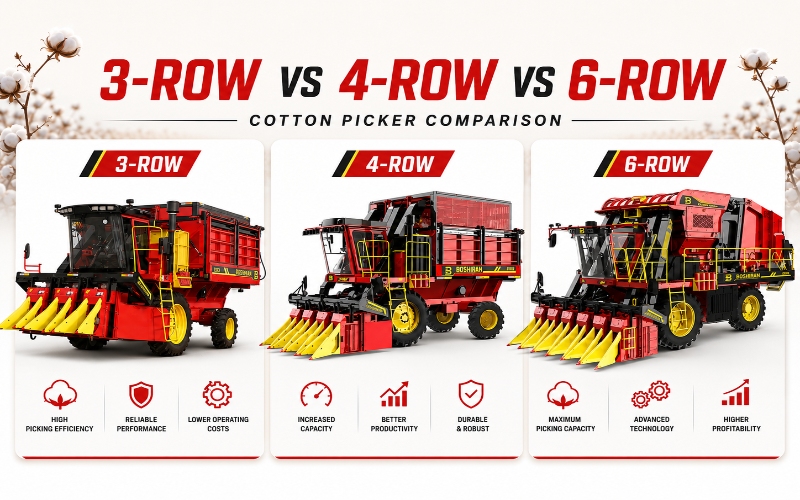
3-Row vs 4-Row vs 6-Row Cotton Picker: How to Choose the Right Machine
2026-07-22
Compare 3-row, 4-row, and 6-row cotton pickers by field capacity, farm size, row spacing, cost, maneuverability, maintenance, and cotton harvesting efficiency.
2025-09-10
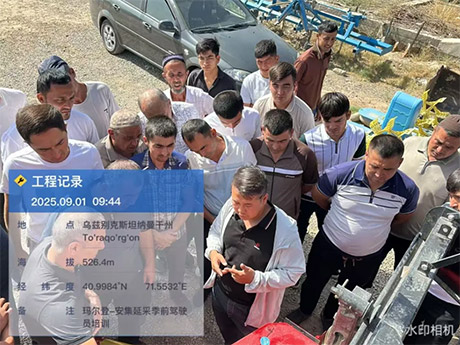
As the 2025 cotton picking season is around the corner, to ensure the cotton picking work proceeds efficiently and smoothly, leaders of Boshiran's Uzbekistan branch, together with after-sales technica
2025-04-27
Recently, the reporter walked into the after-sales workshop, and rows of cotton pickers returned to the factory for maintenance and maintenance were neatly displayed in the workshop. The technicians s
2025-04-19
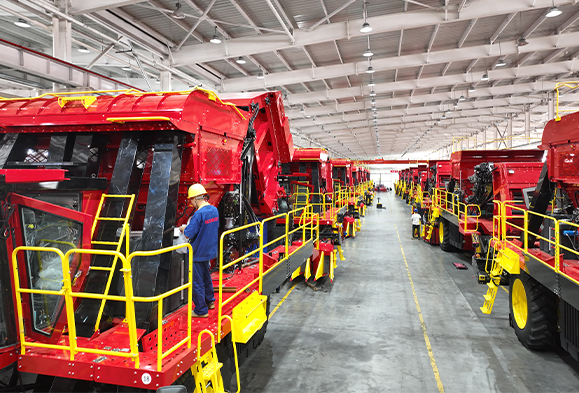
On August 22, in the assembly workshop of Wusu Factory, workers were working overtime to assemble four-row box-type cotton pickers, six-row baling cotton pickers and two-row box-type machines. In orde