2026-09-16 13:50:17
Cotton harvesting is one of the most time-sensitive stages of cotton production. Once the crop reaches the appropriate maturity, farmers have a limited window to harvest efficiently while minimizing lint loss, weather exposure, and unnecessary operating costs.
A modern cotton picker can significantly improve harvesting productivity, but machine capacity alone does not determine field performance. Actual efficiency depends on how well the picker is matched to the crop, field conditions, harvest timing, machine settings, operator practices, and downstream cotton handling system.
For cotton growers looking to improve harvesting efficiency, the goal should not simply be to harvest more acres per hour. A more useful objective is to increase usable cotton harvested per unit of time and cost while maintaining acceptable lint quality and minimizing field losses.
Cotton harvesting efficiency is influenced by several interconnected factors:
Crop maturity and boll opening
Cotton variety and plant architecture
Field preparation
Row spacing and field layout
Harvester operating speed
Machine settings
Moisture and weather conditions
Operator experience
Machine maintenance
Cotton handling and unloading logistics
A high-capacity cotton picker can perform poorly if the crop is uneven, the machine is incorrectly adjusted, or harvested cotton cannot be unloaded and transported efficiently.
For this reason, improving harvesting efficiency requires a whole-system approach rather than focusing on the harvesting machine alone.
Harvest timing is one of the most important factors affecting cotton picker performance.
Cotton should generally be harvested when the majority of the crop has reached suitable maturity and the field has been properly prepared for mechanical harvesting.
Harvesting too early can result in:
Unopened or immature bolls remaining on the plant
Lower harvesting efficiency
Greater potential yield loss
Increased difficulty in removing cotton cleanly
Waiting too long can create different problems. Open cotton may be exposed to rain, wind, dew, and other environmental conditions for an extended period, potentially increasing losses and affecting fiber quality.
The objective is to identify a practical harvesting window in which boll opening, crop moisture, weather, and field conditions are all suitable for mechanical harvesting.
A cotton picker performs best when the crop has been properly prepared.
Before harvesting, growers should inspect:
Boll opening
Plant moisture
Leaf condition
Weed pressure
Plant height
Crop uniformity
Lodging
Row spacing
Defoliation is particularly important in many cotton production systems because excessive leaves can interfere with harvesting and increase foreign material in the harvested cotton.
Effective crop preparation can help the picker collect cotton more consistently and reduce unnecessary material entering the harvesting system.
However, defoliation should be managed according to crop condition and local agronomic recommendations. Applying treatments simply to accelerate harvest without considering plant maturity can create additional problems.
One of the most important differences between an experienced operator and an inexperienced operator is the ability to adjust the machine to changing field conditions.
There is no single setting that works perfectly for every cotton field.
Depending on the machine design and operating conditions, adjustments may include:
Spindle or harvesting-unit settings
Moisture-related settings
Cleaning system adjustments
Fan or airflow settings
Ground speed
Header or harvesting-unit height
Basket or collection system settings
The objective is to find a balance between harvesting capacity, cotton recovery, foreign material removal, and fiber preservation.
If settings are too aggressive, the machine may collect excessive plant material or increase the risk of fiber damage.
If settings are too conservative, more cotton may remain on the plants after the machine passes.
Operators should therefore monitor actual field performance rather than relying solely on default settings.
Ground speed directly affects harvesting capacity, but faster is not always more efficient.
Increasing speed can increase acres covered per hour under favorable conditions. However, if the machine is moving faster than the harvesting units can effectively process the crop, several problems can occur.
Potential consequences include:
Increased cotton left on plants
Higher field losses
Reduced harvesting consistency
Greater stress on machine components
More difficult operation in uneven fields
The appropriate speed depends on crop density, boll opening, field conditions, machine configuration, and harvesting performance.
A useful practice is to establish a practical operating speed based on actual cotton recovery rather than theoretical machine capacity.
If increasing speed results in noticeably greater cotton losses, the additional field coverage may not provide a real economic benefit.
One of the clearest indicators of harvesting performance is how much cotton remains in the field after the picker passes.
Losses can occur because of:
Unopened or poorly opened bolls
Incorrect machine settings
Excessive ground speed
Poor crop preparation
Worn harvesting components
Improper row alignment
Difficult field conditions
Farmers should periodically inspect the harvested rows and surrounding plants.
A simple field assessment can help identify whether cotton is being left behind because of crop maturity or because the harvesting machine needs adjustment.
This distinction is important.
If many unopened bolls remain, changing machine settings may not solve the underlying problem.
If open cotton remains on plants after the machine passes, however, the cause may be related to machine operation, alignment, component condition, or settings.
Preventive maintenance is essential for maintaining harvesting efficiency throughout the cotton season.
A machine that operates efficiently at the beginning of harvest may experience declining performance as components wear.
Before entering the field, inspect critical systems such as:
Harvesting units
Spindles and related components
Belts and chains
Bearings
Hydraulic systems
Airflow and cleaning systems
Sensors
Conveyors
Cotton collection systems
Tires and drive components
Worn components can affect harvesting consistency and increase the risk of downtime during the narrow harvest window.
A pre-season inspection is generally much less disruptive than discovering a major mechanical problem during peak harvest.
For spindle-type cotton pickers, the condition of harvesting components has a direct effect on cotton removal.
Spindles and related components operate under demanding conditions and are exposed to:
Plant material
Dust
Moisture
Mechanical friction
Continuous rotation
Repeated contact with cotton plants
As components wear, their ability to remove cotton efficiently can change.
Regular inspection allows operators to identify wear before it becomes a major harvesting problem.
Replacement intervals should follow the equipment manufacturer's maintenance requirements and should also take actual field conditions into account.
Row alignment is another factor that can have a significant effect on harvesting efficiency.
The harvesting units need to remain properly positioned relative to the cotton rows. Poor alignment can cause:
Increased plant damage
More cotton left behind
Uneven harvesting
Greater mechanical stress
Reduced field capacity
GPS guidance, automatic steering, and other precision technologies can help operators maintain more consistent positioning where appropriate.
However, technology should support—not replace—basic field preparation and operator awareness.
Fields with irregular rows, obstacles, erosion, or uneven terrain may still require active operator management.
Not all harvesting time is spent actually picking cotton.
A significant portion of operating time can be lost through:
Excessive headland turning
Long empty travel distances
Poor field logistics
Delayed unloading
Waiting for transport equipment
Improving field efficiency therefore requires attention to the entire harvesting route.
Before harvest, growers can evaluate:
Field entry and exit points
Headland layout
Transport routes
Unloading locations
Trailer or module logistics
Distance between fields
Better planning can reduce nonproductive machine time and help maintain a continuous harvesting operation.
A modern cotton picker can only achieve its potential if harvested cotton can be moved efficiently.
When the picker reaches its collection capacity but transport or unloading resources are unavailable, harvesting time is lost.
This creates a bottleneck even when the harvesting machine itself is operating normally.
An efficient system should coordinate:
Picker → Unloading → Transport → Storage or Module Formation → Gin
The objective is to prevent one stage from operating significantly faster or slower than the others.
For large farms, harvest scheduling and logistics planning can be just as important as machine specifications.
Modern agricultural machinery can provide valuable operational data.
Depending on the equipment and technology available, farmers may be able to monitor:
Acres harvested
Operating hours
Fuel consumption
Ground speed
Yield
Harvesting losses
Machine utilization
Location
Maintenance information
This data can be used to compare performance between fields and identify recurring problems.
For example, if one field consistently shows higher harvesting losses than another, the difference may be related to crop maturity, soil conditions, plant population, machine settings, or field layout.
Data allows farmers to move from general observations to more specific operational decisions.
Even highly automated harvesting equipment still depends on skilled operation.
Operators should understand how to recognize changes in:
Crop maturity
Boll opening
Plant density
Moisture
Weed pressure
Field conditions
Harvesting losses
An operator who notices a change in machine performance early can make adjustments before losses become significant.
Training should therefore cover not only machine controls but also field observation, basic troubleshooting, maintenance checks, and harvesting quality assessment.
Weather and field conditions can have a major impact on cotton harvesting.
Harvesting excessively wet cotton or entering fields with unsuitable soil conditions can cause:
Increased soil compaction
Reduced machine traction
More plant material entering the harvested cotton
Higher cleaning requirements
Reduced harvesting efficiency
Potential equipment problems
When weather conditions are unfavorable, delaying operations may sometimes be more productive than attempting to harvest under poor conditions.
The decision should consider the expected weather window, crop maturity, field trafficability, and risk of cotton deterioration.
Harvesting efficiency should never be evaluated solely by machine speed.
A picker operating at maximum speed may cover more acres per hour, but if it also produces higher losses or excessive foreign material, the additional productivity may not translate into better economic performance.
A more meaningful measurement is:
Effective Harvesting Efficiency = Usable Cotton Recovered ÷ Total Harvesting Time
Farmers can also consider cost:
Harvesting Cost per Unit of Lint = Total Harvesting Cost ÷ Saleable Lint Produced
These measurements provide a better basis for comparing operating strategies.
When evaluating a modern cotton picker, the purchase price is only one part of the financial equation.
Farmers should consider:
Purchase or lease cost
Depreciation
Fuel consumption
Maintenance
Replacement parts
Labor
Insurance
Financing
Annual utilization
Expected service life
Resale value
Downtime risk
A machine with a higher initial cost may have different operating economics from a lower-cost machine.
The appropriate comparison should therefore focus on total cost of ownership and cost per harvested acre, rather than purchase price alone.
Before and during harvest, farmers can use the following checklist:
Confirm crop maturity.
Assess boll opening.
Complete appropriate crop preparation.
Inspect harvesting components.
Check hydraulic and electrical systems.
Inspect tires and drive components.
Confirm row spacing and field conditions.
Plan transport and unloading logistics.
Train operators.
Monitor ground speed.
Check harvesting losses.
Monitor cotton quality and foreign material.
Inspect machine performance regularly.
Adjust settings when field conditions change.
Avoid unnecessary downtime.
Coordinate unloading and transport.
Inspect the machine for wear.
Record fuel and operating hours.
Review harvesting losses.
Analyze field performance.
Document maintenance requirements.
Prepare the machine for the next operating period.
Improving cotton harvesting efficiency with a modern cotton picker is not simply a matter of choosing a machine with a higher advertised capacity.
The best results come from combining proper harvest timing, effective crop preparation, optimized machine settings, preventive maintenance, skilled operation, efficient field logistics, and continuous performance monitoring.
Farmers should evaluate harvesting performance based on more than acres per hour. Cotton recovery, field losses, lint quality, downtime, fuel consumption, maintenance costs, and total cost per acre all contribute to the actual productivity of the harvesting system.
When these factors are managed together, a modern cotton picker can help farms make better use of the harvest window, reduce avoidable losses, and improve the overall efficiency of cotton production.
Related Products
Discover Our Comprehensive Range of Large Agricultural Machinery Categories
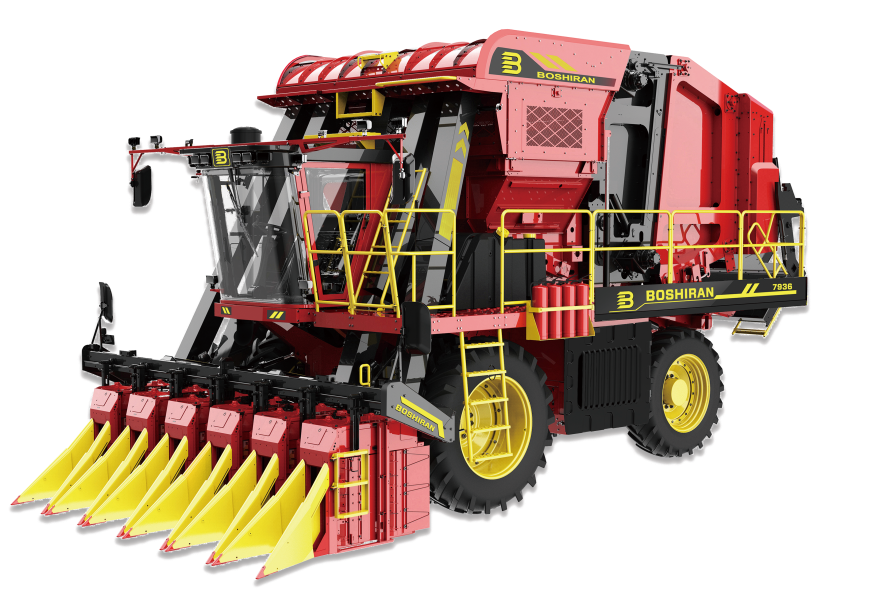
Boshiran 7936(4MZD-6C/6D) Self Propelled Cotton Picker with Baler
The Boshiran 6-row cotton picker is designed spe...
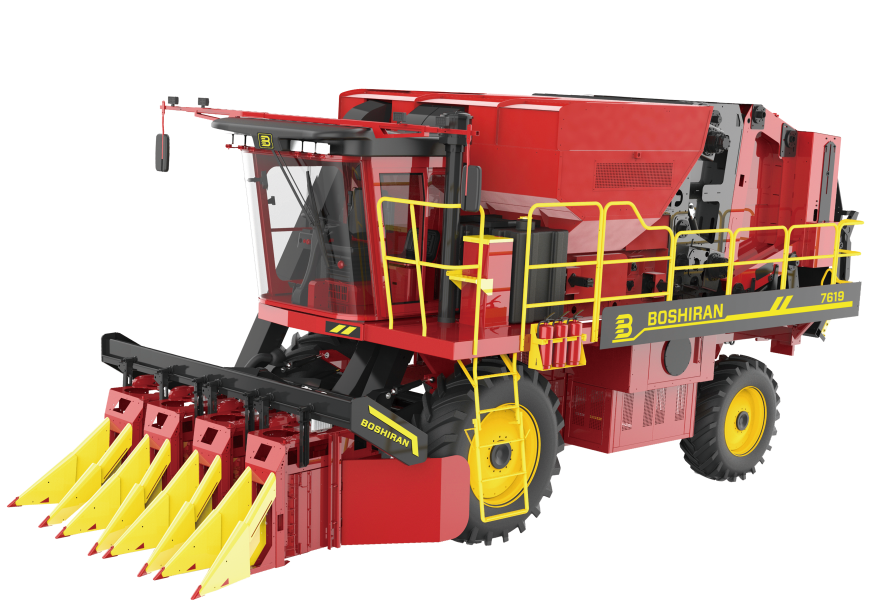
Boshiran 7493 (4MZD-4A) Self Propelled Cotton Picker with Baler
Boshiran independently develops and manufactures...
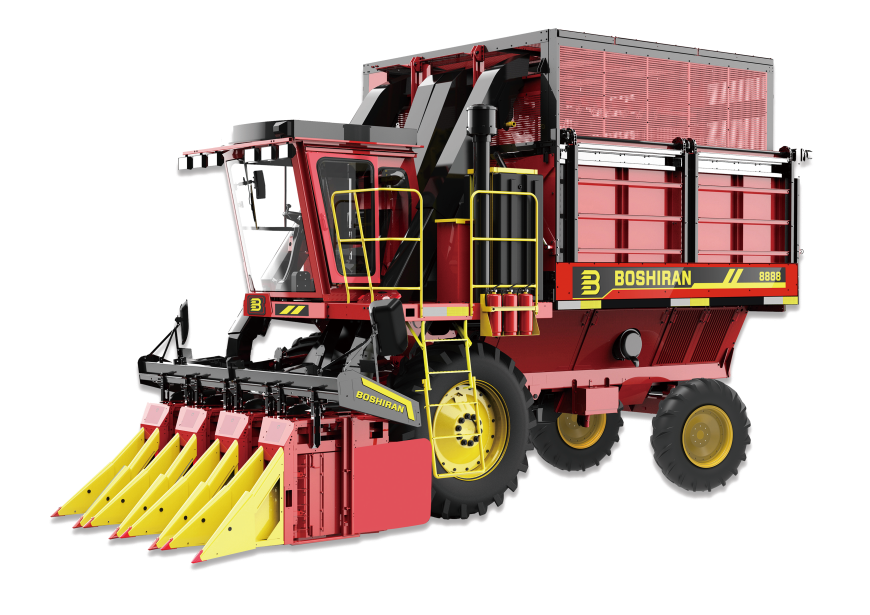
Bosiran 4MZ-4A Self Propelled Cotton Picker
The Boshiran Small Intelligent 4-Row Cotton Pick...
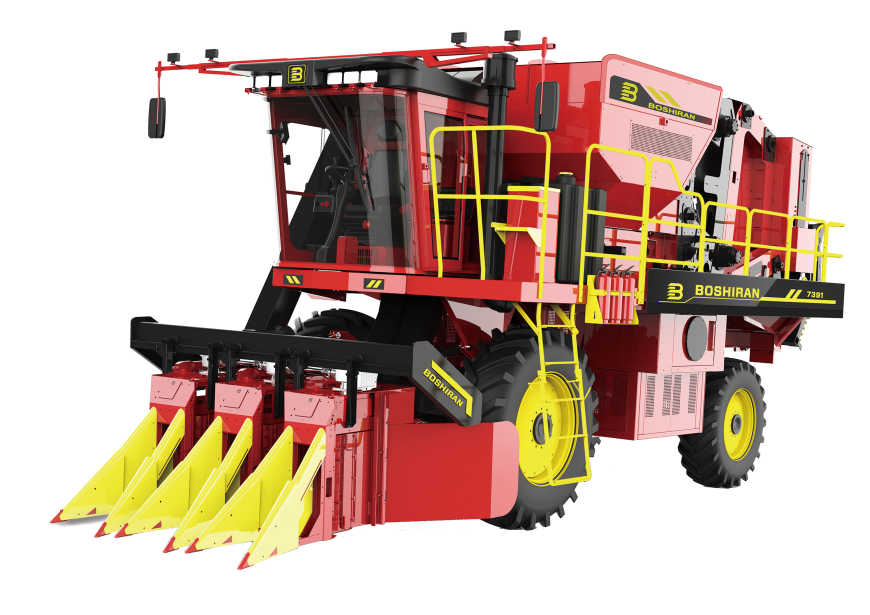
Bosiran 7391 (4MZD-3A) Self Propelled Cotton Picker with Baler
Boshiran 3-Row Baling Cotton Harvester combines ...
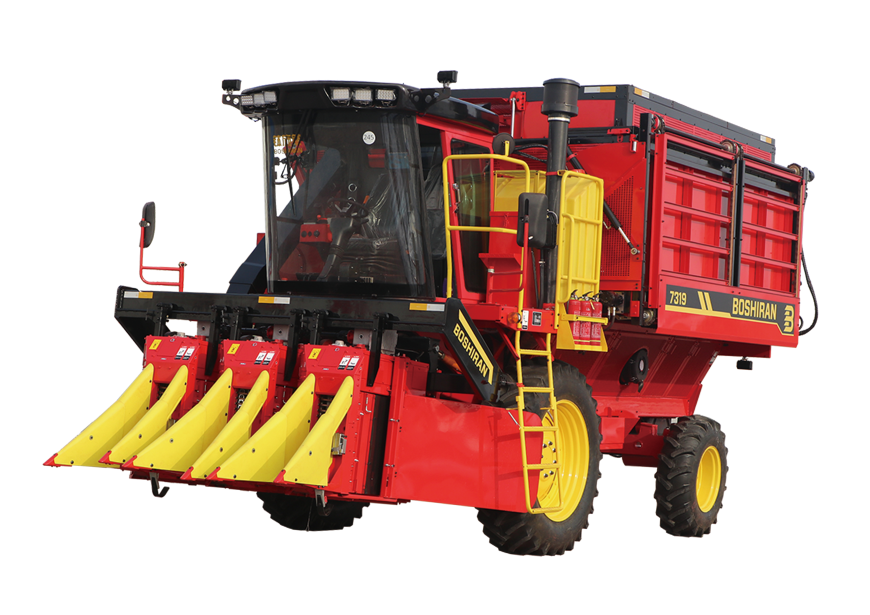
Boshiran 4MZ-3B Self Propelled Cotton Picker
After years of technical accumulation,Boshiran 3...
3-Row vs 4-Row vs 6-Row Cotton Picker: How to Choose the Right Machine
2026-07-22
Compare 3-row, 4-row, and 6-row cotton pickers by field capacity, farm size, row spacing, cost, maneuverability, maintenance, and cotton harvesting efficiency.
2025-09-10
As the 2025 cotton picking season is around the corner, to ensure the cotton picking work proceeds efficiently and smoothly, leaders of Boshiran's Uzbekistan branch, together with after-sales technica
2025-04-27
Recently, the reporter walked into the after-sales workshop, and rows of cotton pickers returned to the factory for maintenance and maintenance were neatly displayed in the workshop. The technicians s
2025-04-19
On August 22, in the assembly workshop of Wusu Factory, workers were working overtime to assemble four-row box-type cotton pickers, six-row baling cotton pickers and two-row box-type machines. In orde