2026-09-21 13:25:15
Cotton harvesting is undergoing a major technological transformation as intelligent agricultural machinery becomes increasingly integrated with automation, electrification, sensors, connectivity, and data-driven control.
Traditional cotton harvesting has relied heavily on mechanical systems and operator experience. Today, the development of the intelligent automated cotton harvester is creating new possibilities for improving harvesting efficiency, reducing avoidable losses, optimizing machine operation, and collecting valuable field data.
An intelligent automated cotton picker combines cotton harvesting technology with automated control systems, sensors, electronic components, and digital monitoring. Rather than simply increasing machine capacity, these technologies are designed to make cotton harvesting more precise, consistent, and responsive to changing crop and field conditions.
For cotton growers, the value of these technologies should ultimately be measured by practical results: improved harvesting productivity, lower operating costs, reduced downtime, better cotton recovery, and more efficient farm management.
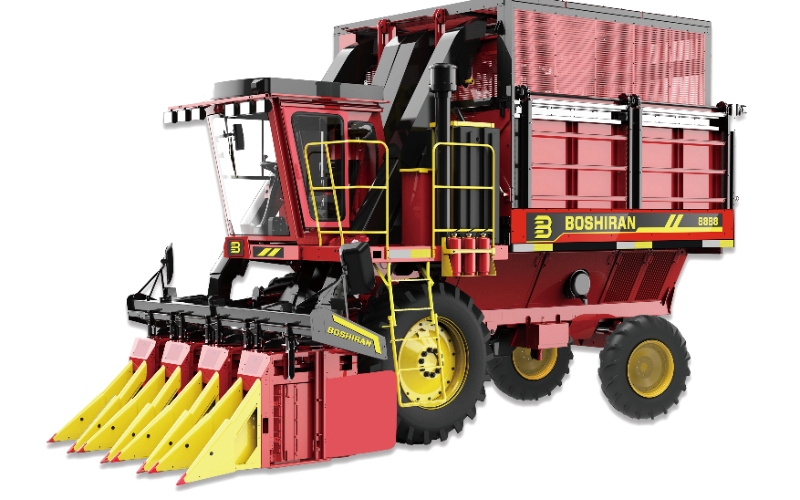
An intelligent automated cotton harvester is a modern cotton harvesting machine that integrates automated control, sensing, data collection, and intelligent management technologies into the harvesting process.
Depending on the machine design, an intelligent automated cotton harvester may incorporate:
Automated driving and steering
Intelligent harvesting-unit control
Crop and field sensors
Real-time machine monitoring
Automatic operating adjustments
Yield monitoring
GPS or GNSS positioning
Remote diagnostics
Predictive maintenance
Digital data management
The exact level of automation varies between machines.
Some systems primarily assist the operator by providing information and automated controls, while more advanced systems can automatically adjust specific harvesting functions according to field conditions.
The objective is to move from conventional machine operation toward a more responsive and data-driven cotton harvesting system.
An intelligent automated cotton picker is a type of cotton harvesting equipment designed to combine selective cotton picking with intelligent automation technologies.
The machine can use sensors, electronic controls, positioning systems, and software to monitor both machine operation and harvesting conditions.
Potential functions include:
Automatic row following
Harvesting-unit monitoring
Operating-speed control
Crop condition detection
Machine fault alerts
Harvesting performance monitoring
Automatic unloading functions
Field data collection
The terms intelligent automated cotton harvester and intelligent automated cotton picker can both be used to describe this type of technology, although terminology may vary depending on machine design and market.
The development of intelligent agricultural machinery is driven by several challenges facing modern agriculture.
Cotton harvesting requires large amounts of equipment, labor, fuel or energy, and time. The harvesting window can also be limited by crop maturity and weather conditions.
At the same time, cotton fields are rarely completely uniform.
Different areas of the same field can have variations in:
Crop density
Boll opening
Plant height
Soil conditions
Yield potential
Moisture
Weed pressure
Traditional harvesting systems often depend heavily on fixed machine settings and operator adjustments.
Intelligent agricultural machinery provides an opportunity to respond to these variations more efficiently.
Automation is one of the most important technologies behind modern cotton harvesting.
An intelligent automated cotton picker can assist with repetitive or precision-sensitive tasks, allowing the operator to focus more on monitoring overall machine and field performance.
Depending on the system, automation may support:
Steering
Row alignment
Speed management
Harvesting-unit control
Machine monitoring
Unloading
Fault detection
The purpose of automation is not necessarily to eliminate the operator.
Instead, it is designed to reduce repetitive workloads and improve the consistency of machine operation.
Electrification is another important development in intelligent agricultural machinery.
Traditional cotton harvesting equipment relies heavily on internal combustion engines, mechanical transmissions, and hydraulic systems.
Modern intelligent automated cotton harvesters can incorporate electric motors and electronically controlled components into selected machine systems.
Electric technology may be applied to:
Harvesting mechanisms
Fans
Conveyors
Auxiliary drives
Control systems
Sensors
Material-handling systems
Electric drives can provide precise control over speed and torque and can work closely with electronic control systems.
However, an electrically driven component should not automatically be interpreted as a fully electric cotton harvester.
A machine can use extensive electric technology while still relying on an internal combustion engine as its primary energy source.
Fully battery-electric cotton harvesting presents both opportunities and engineering challenges.
Cotton harvesting equipment can operate for long periods under demanding field conditions, which creates substantial energy requirements.
A battery-electric intelligent automated cotton harvester would need to address:
Battery capacity
Charging time
Operating range
Battery weight
Thermal management
Power output
Battery durability
Charging infrastructure
Battery weight is particularly important for agricultural machinery because additional machine mass can affect soil compaction and field performance.
For this reason, electrification may initially develop through individual electric systems, hybrid architectures, and electrically driven components before becoming fully battery-electric across all machine functions.
Sensors are a fundamental component of an intelligent automated cotton picker.
They allow the machine to collect information about crop conditions and machine performance in real time.
Depending on the equipment, sensors may monitor:
Crop density
Cotton flow
Machine load
Operating speed
Temperature
Pressure
Moisture
Component condition
Machine position
This information can help the machine respond to changing conditions and provide operators with a clearer understanding of harvesting performance.
Cotton fields can contain significant variation in crop condition.
An intelligent automated cotton harvester can potentially use sensing technologies to identify differences in crop density and harvesting conditions.
This information can support more responsive machine control.
For example, a machine may be able to identify changes in crop conditions and provide information that helps determine whether adjustments to operating speed or harvesting settings are necessary.
The long-term development direction is toward adaptive cotton harvesting, in which machine operation responds more dynamically to actual field conditions.
Maintaining accurate alignment with cotton rows is essential for efficient harvesting.
Poor alignment can result in:
Missed cotton
Plant damage
Uneven harvesting
Increased operator workload
Reduced field efficiency
An intelligent automated cotton picker can use GPS, GNSS, machine vision, or other positioning technologies to improve row-following accuracy.
Automated steering can help reduce unnecessary overlap and keep harvesting units more consistently aligned with the crop.
This is particularly valuable in large fields where operators may work for extended periods.
Ground speed has a direct effect on harvesting productivity.
However, maximum speed does not always produce maximum economic efficiency.
If an intelligent automated cotton harvester operates too quickly for the crop conditions, it may result in:
Higher cotton losses
Reduced harvesting consistency
Increased machine load
Greater component wear
Intelligent control systems can use machine and field information to support more appropriate operating speeds.
The objective is to achieve a balance between:
Field Capacity + Cotton Recovery + Machine Reliability + Operating Cost
This approach is more meaningful than evaluating a machine based solely on its maximum theoretical speed.
One of the major advantages of intelligent agricultural machinery is the ability to monitor harvesting performance in real time.
An intelligent automated cotton picker may provide information about:
Harvested area
Operating time
Ground speed
Cotton flow
Machine condition
Fuel or energy consumption
Yield
Field location
This information allows operators and farm managers to identify problems while harvesting is still underway.
For example, if one section of a field shows lower harvesting performance, the operator can investigate whether the cause is related to crop maturity, field conditions, machine settings, or equipment condition.
Yield monitoring can turn the intelligent automated cotton harvester into an important source of agricultural data.
Harvest data can help farmers understand spatial variations across their fields.
Over multiple seasons, this information may reveal patterns related to:
Soil productivity
Irrigation
Crop management
Weather
Planting density
Harvesting performance
When integrated with other precision agriculture systems, harvesting data can contribute to a broader farm management strategy.
The value of data comes from its application.
Collecting large amounts of information is not enough. Farmers need to use the data to identify problems, compare field performance, and improve future management decisions.
Maintenance is critical during cotton harvesting because unexpected downtime can result in significant operational losses.
An intelligent automated cotton picker can use sensors and machine data to monitor component conditions and identify abnormal operating patterns.
This supports predictive maintenance.
Instead of relying only on fixed maintenance intervals, operators can use machine data together with physical inspections to identify components that may require attention.
Potential benefits include:
Reduced unexpected downtime
Better maintenance scheduling
More efficient spare-parts planning
Improved machine availability
Earlier identification of potential failures
Predictive maintenance does not replace routine inspection. It adds another layer of information to the maintenance process.
Connectivity is becoming increasingly important in intelligent agricultural machinery.
A connected intelligent automated cotton harvester can transmit operational data to farm management systems or other digital platforms.
Potential data includes:
Machine location
Operating hours
Harvested area
Machine alerts
Maintenance information
Fuel or energy consumption
Harvesting performance
Remote access to machine data can help farm managers monitor multiple machines and identify operational issues without being physically present in every field.
Artificial intelligence is another emerging technology with potential applications in cotton harvesting.
AI systems can analyze large amounts of machine and field data to identify patterns that may not be immediately visible through manual observation.
Potential applications include:
Crop condition recognition
Harvesting-loss analysis
Machine performance optimization
Predictive maintenance
Field productivity analysis
Automated decision support
For example, AI could potentially analyze historical harvesting data and identify relationships between machine settings, crop conditions, and harvesting losses.
However, AI should be viewed as a decision-support technology rather than a substitute for agronomic knowledge and experienced machine operation.
An intelligent automated cotton picker can help identify and manage avoidable harvesting losses, but technology cannot eliminate all losses.
Cotton losses can result from:
Incomplete boll opening
Poor crop preparation
Incorrect machine settings
Excessive operating speed
Worn components
Uneven crop maturity
Poor row alignment
Weather conditions
Intelligent monitoring can help identify abnormal harvesting performance and provide data for corrective action.
The effectiveness of the technology ultimately depends on how accurately the system detects the problem and how quickly the operator or machine responds.
The combination of electrification and intelligent control may also improve energy management.
An intelligent automated cotton harvester can potentially optimize machine operation by reducing unnecessary power consumption and adjusting machine functions according to actual operating conditions.
Potential benefits include:
More precise power management
Reduced unnecessary machine operation
Better fuel or energy utilization
More efficient field coverage
Improved machine utilization
However, energy efficiency must be evaluated across the complete machine system.
Battery production, charging infrastructure, electrical losses, engine efficiency, machine weight, and operating conditions all influence the final energy performance.
Intelligent automation and fully autonomous harvesting are not the same thing.
An intelligent automated cotton picker may provide:
Automated steering
Sensor-based monitoring
Automatic machine adjustments
Machine diagnostics
Digital data collection
Operator alerts
Fully autonomous harvesting requires additional capabilities, including environmental perception, obstacle detection, navigation, decision-making, safety systems, and autonomous task management.
Cotton fields can contain uneven terrain, obstacles, changing weather conditions, and variable crop conditions.
Human supervision therefore remains an important part of many automated harvesting systems.
Farmers considering intelligent cotton harvesting equipment should evaluate the technology based on actual operational requirements.
Consider:
Acres harvested per hour
Cotton recovery
Harvesting losses
Cotton quality
Performance under different field conditions
Evaluate whether automated functions can address real problems on the farm.
Useful technologies may include:
Automatic steering
Intelligent speed control
Automatic harvesting adjustments
Automated unloading
Machine diagnostics
Compare:
Fuel consumption
Electricity consumption
Charging requirements
Maintenance costs
Machine utilization
Consider whether the machine can collect and use:
Yield data
Field location
Machine performance data
Maintenance information
Operating records
Data should ideally integrate with the farm's broader precision agriculture workflow.
Advanced intelligent agricultural machinery requires appropriate technical support.
Before purchasing, farmers should evaluate the availability of:
Spare parts
Technical service
Software support
Connectivity
Charging infrastructure
Trained technicians
The development of the intelligent automated cotton harvester is part of a broader transformation in agricultural machinery.
Future cotton harvesting systems are likely to become increasingly connected, automated, sensor-driven, and data-oriented.
Several technologies may play an increasingly important role:
Artificial intelligence
Machine vision
Precision positioning
Advanced crop sensing
Predictive maintenance
Electric drive systems
Autonomous navigation
Cloud-based farm management
Real-time machine-to-machine communication
The long-term direction is toward a more integrated form of intelligent agricultural machinery, where harvesting equipment can sense field conditions, process information, adjust operations, and communicate performance data with other farm systems.
The development of intelligent automated cotton harvesters and intelligent automated cotton pickers is changing the way cotton can be harvested and managed.
Electrification provides opportunities for more precise machine control, while sensors and automation allow harvesting equipment to respond more effectively to changing crop and field conditions. Connectivity, predictive maintenance, yield monitoring, and data analysis further extend the role of the cotton picker from a harvesting machine into an important part of a digital farming system.
However, intelligent technology is not valuable simply because a machine has more sensors or automated functions.
Its real value lies in practical outcomes: higher harvesting efficiency, lower avoidable losses, reduced downtime, better energy utilization, improved operator productivity, and more informed farm management decisions.
As intelligent agricultural machinery continues to develop, the combination of automation, electrification, precision technology, and agricultural expertise will play an increasingly important role in the future of cotton harvesting.
Related Products
Discover Our Comprehensive Range of Large Agricultural Machinery Categories