2026-09-11 09:25:46
Choosing the right cotton harvesting method can have a significant impact on harvest efficiency, labor requirements, cotton quality, and overall farm economics. Two of the most widely used mechanical harvesting approaches are cotton picking and cotton stripping.
Although both methods are designed to mechanize cotton harvesting, they work in fundamentally different ways. A cotton picker selectively removes open cotton bolls from the plant, while a cotton stripper removes the cotton, burrs, leaves, and other plant material together.
So, which method is better for your farm?
The answer depends on several factors, including cotton variety, boll-opening characteristics, field conditions, expected lint quality, harvest timing, and the equipment and processing infrastructure available to you.
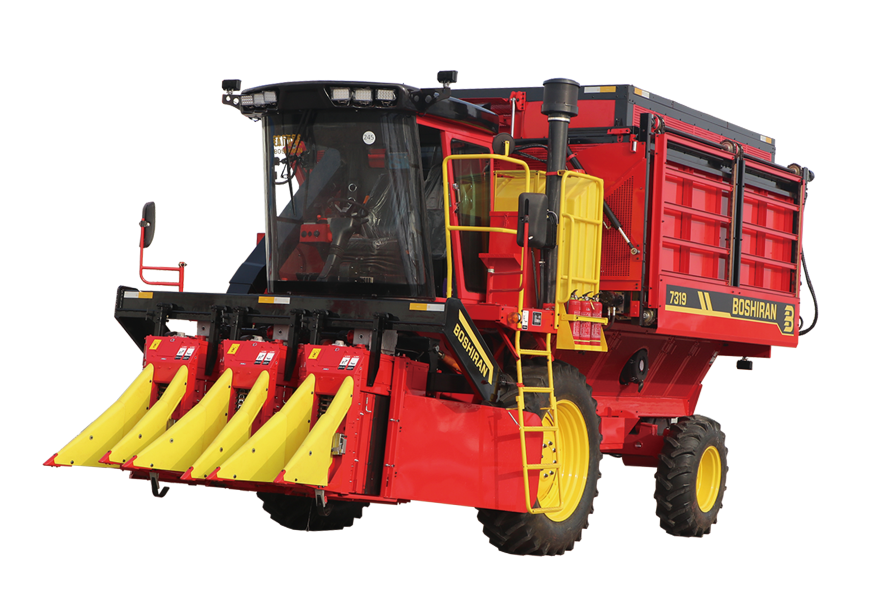
A cotton picker is a harvesting machine designed to selectively remove open cotton from the cotton plant while leaving much of the remaining plant material in the field.
Modern spindle-type cotton pickers typically use rotating spindles to grasp and remove lint from open bolls. The harvested cotton is then transferred into the machine's collection system.
Because the harvesting mechanism focuses primarily on open cotton, picking can produce a relatively clean harvested product compared with more aggressive harvesting methods.
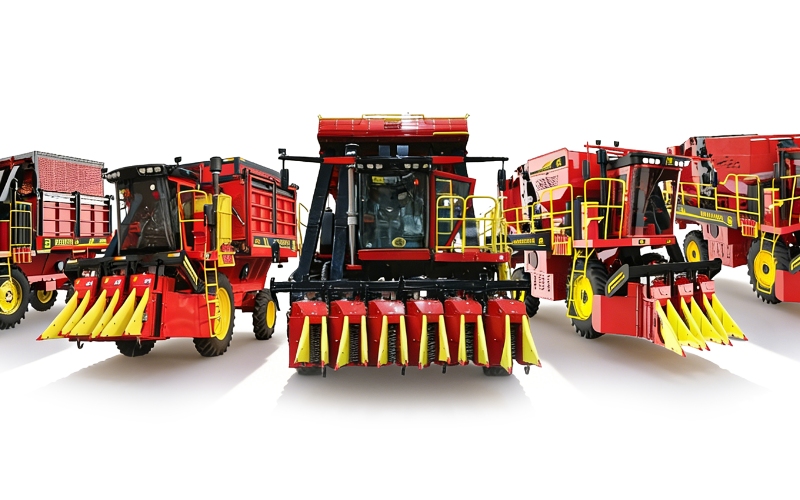
The basic harvesting process generally involves:
The machine moves through mature cotton rows.
Rotating spindles contact the open bolls.
Cotton fibers are pulled from the bolls.
The harvested cotton is conveyed into a basket or collection system.
Cotton is later transferred for handling, transport, and ginning.
Cotton picking is particularly suited to production systems where cotton plants are relatively uniform and the majority of bolls open within a manageable harvesting window.
A cotton stripper uses a different harvesting principle. Instead of selectively removing cotton from individual open bolls, it strips or pulls a larger portion of the cotton plant material into the harvesting machine.
The harvested material can include:
Cotton lint
Open and partially open bolls
Burrs
Leaves
Stems
Other plant residue
The material therefore requires more extensive cleaning during subsequent processing.
Cotton stripping is commonly associated with cotton production systems where the crop and field conditions make selective picking less practical or where the production system is designed around stripper harvesting.
The main difference between the two systems is selectivity.
A cotton picker attempts to harvest primarily the usable open cotton, whereas a cotton stripper collects a much larger portion of the cotton plant and relies more heavily on downstream cleaning.
| Factor | Cotton Picker | Cotton Stripper |
|---|---|---|
| Harvesting principle | Selective removal of cotton | Stripping of cotton and plant material |
| Harvested material | Primarily lint from open bolls | Cotton plus more plant residue |
| Cleaning requirement | Generally lower | Generally higher |
| Typical harvest quality | Relatively clean | More trash may enter harvested material |
| Harvesting selectivity | High | Lower |
| Field tolerance | Depends strongly on crop condition | Can be advantageous under certain dryland conditions |
| Equipment complexity | Generally more complex harvesting mechanism | Simpler harvesting principle |
| Best fit | Uniform, well-opened cotton | Certain dryland and stripper-oriented production systems |
| Ginning requirements | Standard cotton gin processing | Greater cleaning may be required |
The table provides a general comparison, but actual performance varies considerably with cotton variety, weather, field preparation, machine configuration, and local production practices.
The biggest advantage of cotton picking is its selective harvesting capability.
Because the machine is designed to target open cotton, less unwanted plant material may enter the harvested crop. This can simplify material handling and reduce the cleaning burden before ginning.
Cotton picking can also be beneficial when:
Cotton plants have relatively uniform boll opening.
High lint quality is an important production objective.
The crop has sufficient height and structure for effective spindle harvesting.
Harvest timing can be managed around boll opening.
The farm has access to suitable picking and cotton-handling equipment.
Another important consideration is harvest flexibility. In suitable conditions, a picking system can allow the grower to harvest open cotton while leaving unopened bolls for a subsequent pass.
Cotton pickers generally require more specialized harvesting equipment and maintenance.
Their performance can also be affected by:
Poorly opened bolls
Excessively wet conditions
Heavy weed pressure
Irregular plant growth
Poor crop architecture
Premature defoliation or excessive leaf retention
A picker is therefore not automatically the best choice simply because it produces cleaner harvested cotton. The machine must be compatible with the crop and field conditions.
Cotton stripping can offer advantages in production systems where the crop is well suited to the method.
One important benefit is the ability to harvest a large amount of material in a single operation. Under suitable conditions, this can make the harvesting process efficient, particularly in large-scale production systems.
Stripping may also be considered where:
The crop is suitable for stripper harvesting.
Dry field conditions are common.
Cotton plants have characteristics that support stripping.
Labor availability is limited.
The farm's gin and handling system is equipped to process higher-trash cotton.
For some dryland production systems, stripping can provide a practical way to complete harvest within a limited period.
The primary disadvantage is the amount of non-cotton material collected with the crop.
Leaves, burrs, stems, and other plant material can increase the cleaning requirements before and during ginning.
This means that evaluating a stripper only by its field harvesting speed can be misleading. The entire system should be considered, including:
harvesting → transport → cleaning → ginning → lint quality
If the additional cleaning requirements create significant downstream costs or affect fiber quality, the apparent harvesting advantage may be reduced.
There is no universal answer.
Cotton quality depends on much more than the type of harvesting machine. Important variables include:
Cotton variety
Boll maturity
Weather conditions
Defoliation
Harvest timing
Moisture content
Machine settings
Field losses
Handling and storage
Gin cleaning and processing
A picker generally has the advantage of collecting less plant material at harvest, which can help reduce the initial trash load.
However, poor harvesting conditions can negatively affect cotton quality even when a picker is used. Similarly, a well-managed stripper harvesting system can produce commercially acceptable cotton when the crop, machinery, and ginning operation are properly matched.
For this reason, farmers should evaluate actual lint quality and total processing costs, rather than assuming that one harvesting method will always produce better results.
Harvesting efficiency should not be measured only by acres harvested per hour.
A more useful evaluation considers the entire production system.
For example:
Total Harvesting Cost = Machine Cost + Fuel + Labor + Maintenance + Transport + Cleaning + Ginning Impact + Crop Losses
A harvesting method that covers more acres per hour may not necessarily have the lower total cost if it results in greater cleaning requirements, higher losses, or additional processing expenses.
Farmers should therefore compare:
Acres harvested per hour
Fuel consumption
Labor requirements
Machine ownership or rental costs
Maintenance requirements
Cotton losses
Trash content
Gin processing costs
Final lint quality
Expected yield
This whole-system approach provides a more realistic basis for equipment selection.
Cotton variety is one of the most important factors in determining whether picking or stripping is appropriate.
Different varieties can vary in:
Plant height
Branching structure
Boll size
Boll opening behavior
Fiber characteristics
Maturity period
Resistance to lodging
Suitability for mechanical harvesting
A variety that produces relatively uniform boll opening and a suitable plant structure may be well suited to selective picking.
In contrast, some production systems may favor varieties and agronomic practices that are compatible with stripping.
Before purchasing or renting harvesting equipment, farmers should confirm that the machine is appropriate for the varieties commonly grown in their region.
Field conditions can change the economics of harvesting equipment significantly.
Consider the following factors.
Heavy soils that remain wet after rainfall can delay harvesting operations and increase the risk of compaction.
Well-drained fields may provide more flexibility when scheduling harvesting operations.
Weeds can interfere with mechanical harvesting and increase the amount of foreign material entering the harvested crop.
Effective weed management before harvest can therefore improve harvesting efficiency regardless of the machine type.
Uniform cotton plants and consistent boll opening make mechanical harvesting more predictable.
Uneven maturity can make it more difficult to achieve efficient harvesting in a single pass.
Weather is another major consideration.
Rainfall near harvest can affect:
Boll opening
Fiber moisture
Field trafficability
Defoliation effectiveness
Harvest losses
Cotton storage conditions
The ideal harvesting method for one region may not be appropriate in another because climate and harvest-season weather patterns are different.
Mechanical harvesting works best when the crop is properly prepared.
Before harvesting, growers should assess:
Percentage of open bolls
Remaining unopened bolls
Leaf condition
Plant moisture
Weather forecast
Expected field losses
Defoliation effectiveness
Harvesting too early can leave valuable cotton in unopened bolls.
Waiting too long can expose open cotton to weather-related deterioration and increase the risk of losses.
The optimal harvest window is therefore a balance between crop maturity, weather risk, field conditions, and machine performance.
Farm size alone should not determine the harvesting method, but it affects the economics.
Smaller farms may place greater emphasis on:
Equipment rental availability
Local contractor services
Machine utilization
Maintenance costs
Capital investment
Purchasing a highly specialized harvesting machine may not be economical if annual utilization is low.
Large-scale farms may place greater emphasis on:
Harvesting capacity
Daily field coverage
Machine uptime
Fuel efficiency
Logistics
Operator productivity
Integration with cotton handling and ginning
For larger operations, even small differences in harvesting efficiency can have a significant impact on total seasonal costs.
Rather than asking which machine is universally better, consider the following questions.
Check whether your varieties and plant architecture are suited to picking or stripping.
More uniform maturity can make selective harvesting easier to manage.
Consider rainfall, humidity, temperature, soil moisture, and field trafficability.
A stripping system may introduce more plant material into the harvested crop, making gin capability particularly important.
Calculate whether purchasing, leasing, renting, or hiring a harvesting contractor makes the most economic sense.
If fiber quality is a major priority, evaluate how harvesting and subsequent handling affect the final lint.
Do not compare machines solely based on purchase price. Include fuel, maintenance, labor, depreciation, field losses, cleaning, transport, and ginning-related costs.
A simple way to approach the decision is to evaluate your operation across five dimensions:
Crop → Field → Climate → Infrastructure → Economics
Crop: Is the variety suited to picking or stripping?
Field: Are plant height, row spacing, weeds, soil conditions, and terrain compatible with the machine?
Climate: What weather conditions normally occur during your harvest window?
Infrastructure: Can your existing cotton handling and ginning system efficiently process the harvested material?
Economics: What is the expected total cost per acre and cost per unit of lint produced?
This approach is more reliable than choosing equipment based solely on machine capacity or purchase price.
The choice between a cotton picker and a cotton stripper is ultimately a farm-specific equipment decision.
A cotton picker offers selective harvesting and can reduce the amount of plant material entering the harvested cotton. It can be particularly appropriate for production systems focused on uniform boll opening and maintaining cotton quality.
A cotton stripper takes a different approach, harvesting cotton together with more plant material. Under suitable crop, climate, and production conditions, it can provide an efficient harvesting solution, particularly when the farm's cleaning and ginning infrastructure is designed to handle the additional material.
Before making an investment, compare the two systems using your own farm data rather than relying on general assumptions. Evaluate yield, lint quality, harvest losses, acres per hour, fuel consumption, labor, maintenance, cleaning, ginning costs, and total cost per acre.
The best harvesting method is the one that fits the complete production system—not simply the machine that appears fastest or least expensive at the point of purchase.
Related Products
Discover Our Comprehensive Range of Large Agricultural Machinery Categories
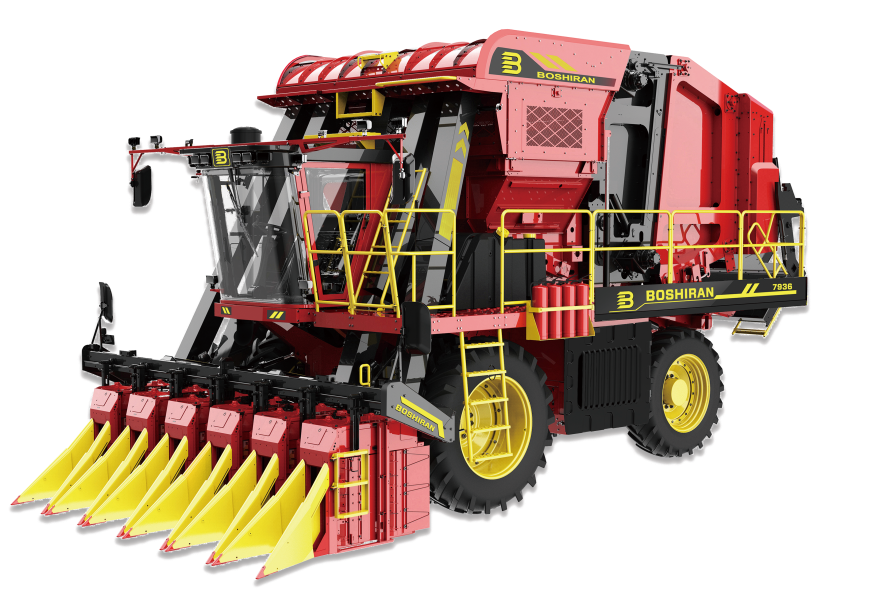
Boshiran 7936(4MZD-6C/6D) Self Propelled Cotton Picker with Baler
The Boshiran 6-row cotton picker is designed spe...
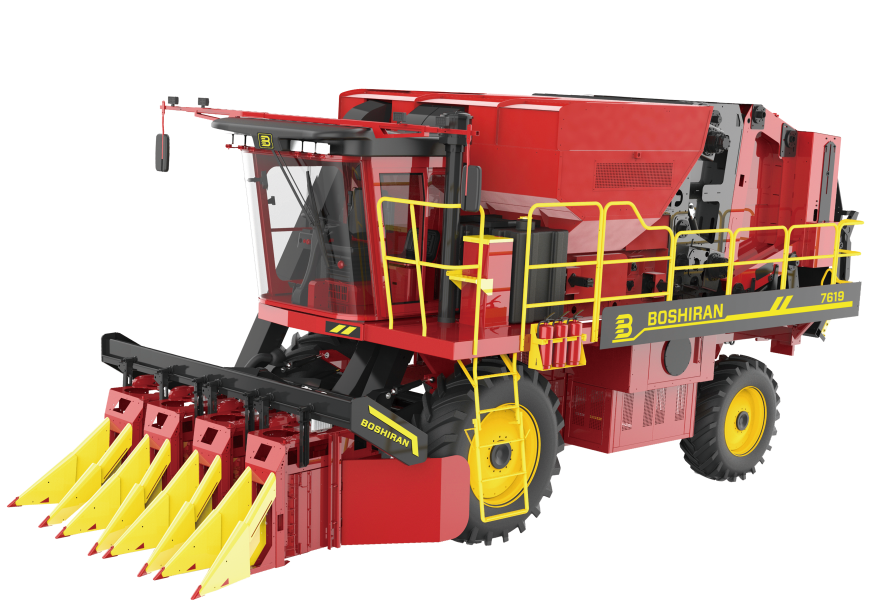
Boshiran 7493 (4MZD-4A) Self Propelled Cotton Picker with Baler
Boshiran independently develops and manufactures...
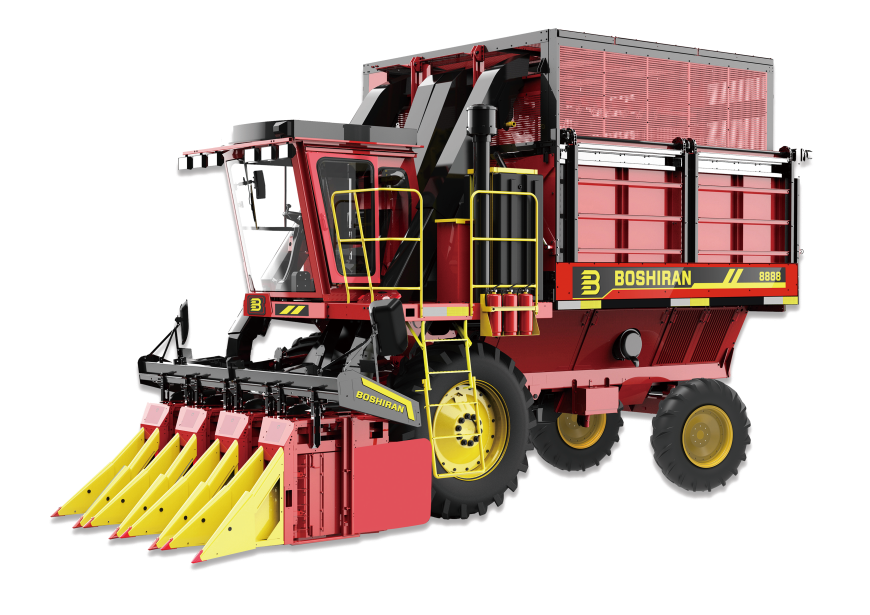
Bosiran 4MZ-4A Self Propelled Cotton Picker
The Boshiran Small Intelligent 4-Row Cotton Pick...
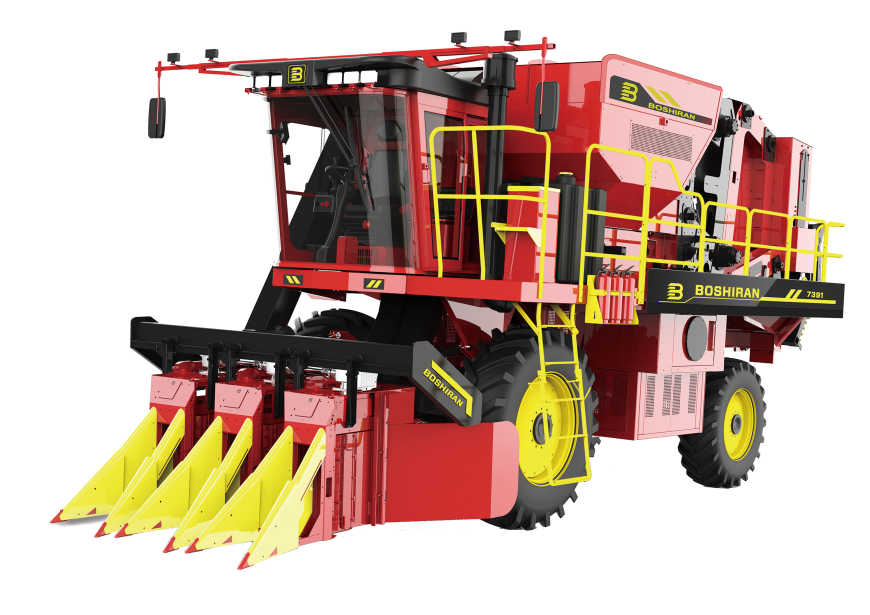
Bosiran 7391 (4MZD-3A) Self Propelled Cotton Picker with Baler
Boshiran 3-Row Baling Cotton Harvester combines ...
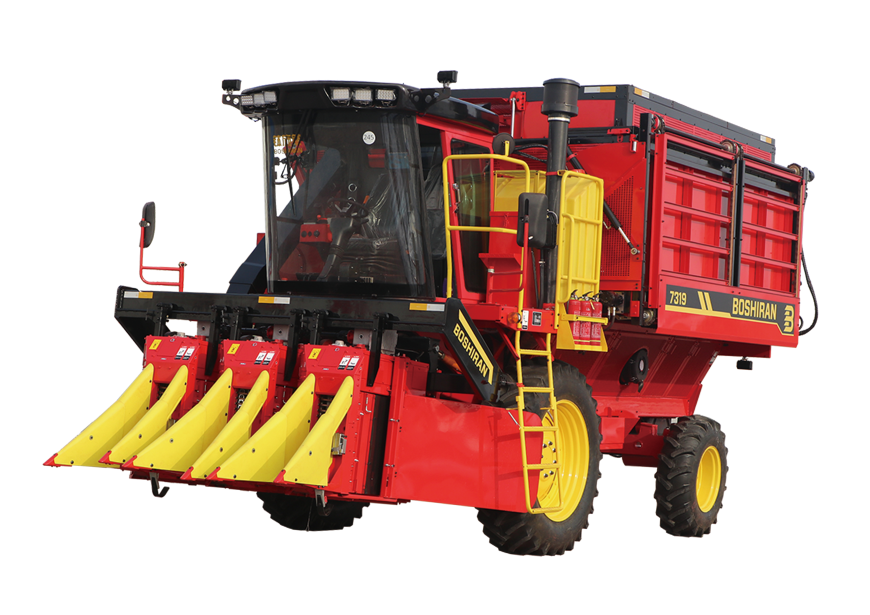
Boshiran 4MZ-3B Self Propelled Cotton Picker
After years of technical accumulation,Boshiran 3...
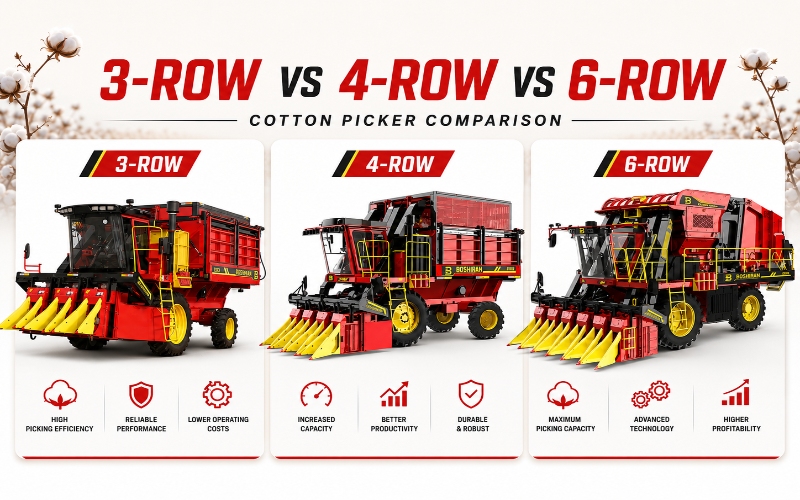
3-Row vs 4-Row vs 6-Row Cotton Picker: How to Choose the Right Machine
2026-07-22
Compare 3-row, 4-row, and 6-row cotton pickers by field capacity, farm size, row spacing, cost, maneuverability, maintenance, and cotton harvesting efficiency.
2025-09-10
As the 2025 cotton picking season is around the corner, to ensure the cotton picking work proceeds efficiently and smoothly, leaders of Boshiran's Uzbekistan branch, together with after-sales technica
2025-04-27
Recently, the reporter walked into the after-sales workshop, and rows of cotton pickers returned to the factory for maintenance and maintenance were neatly displayed in the workshop. The technicians s
2025-04-19
On August 22, in the assembly workshop of Wusu Factory, workers were working overtime to assemble four-row box-type cotton pickers, six-row baling cotton pickers and two-row box-type machines. In orde